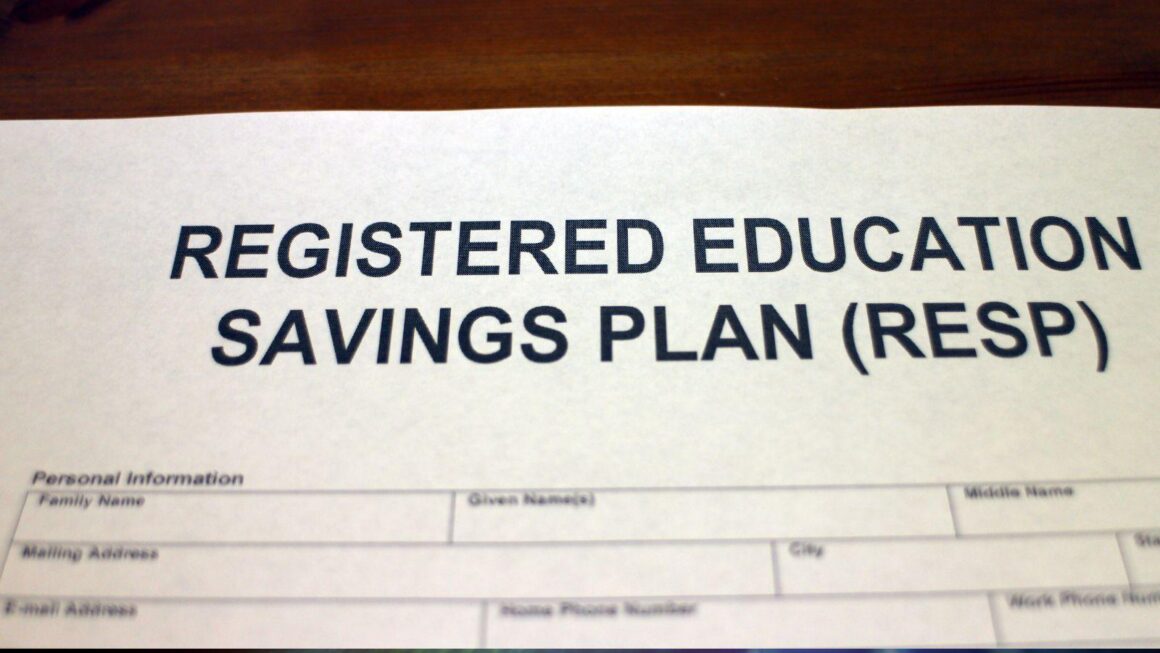
Canadian parents have several places to park education money. A TFSA grows tax-free, and carries no rules about how the money eventually gets spent. A plain non-registered account has no ceiling at all. In-trust accounts shift the tax bill onto a child in a low bracket, though the attribution rules and the irrevocable nature of the gift catch families off guard. Permanent life insurance gets sold as a savings vehicle and doesn’t always bear simpler options once you count the costs. An RDSP may be the right answer when a child qualifies for the disability tax credit. Only one of those accounts comes with the federal government depositing money alongside yours. That is the RESP, and it is why math usually favors it.
What is an RESP?
A Registered Education Savings Plan is an account registered with the Canada Revenue Agency that shelters investment growth until a student withdraws it for school. You get no tax deduction, which separates it from an RRSP. What you get instead is grant money.
Candidates held $98.9 billion in RESP assets at the end of 2025, spread across 80 registered promoters, and about 54% of children under 18 have received at least one federal education grant.
How Does an RESP Work?
You can contribute up to $50,000 per child over a lifetime, with no annual limit. Go over, and the CRA charges 1% a month on the excess. The Canada Education Savings Grant pays 20% on the first $2,500 you put in each year, so a $2,500 deposit returns $500. The lifetime cap is $7,200 per child. Skip a year, and that room carries forward, letting you claim up to $1,000 by contributing $5,000. Families under $57,375 in adjusted income collect an extra 20% on the first $500 contributed each year, and those up to $114,750 get an extra 10%.
Lower-income families also qualify for the Canada Learning Bond, worth $500 up front plus $100 a year to a $2,000 maximum, with no contribution required at all. Take-up sits at just 43.9%. Ottawa will begin opening accounts automatically for eligible children in 2028-29 and is extending the retroactive claim window from ages 20-30. Two provinces add their own money: British Columbia’s one-time $1,200 BCTESG for children aged six to nine, and Quebec’s QESI at 10% of contributions, up to $250 a year and $3,600 lifetime.
Withdrawals split in two. An Educational Assistance Payment carries the grants and growth, lands on the student’s tax return, and is capped at $8,000 during the first 13 weeks of full-time study. A PSE withdrawal returns your own contributions, tax-free and uncapped. Trade schools, colleges, and apprenticeships all qualify, not just universities.
If your child skips school entirely, your contributions come back untouched, the grants return to Ottawa, and the growth becomes an Accumulated Income Payment taxed at your marginal rate plus 20%. Rolling up to $50,000 of it into your RRSP avoids that penalty. Those rules apply everywhere. What varies, and what decides how much of the $7,200 survives to pay tuition, is the provider you sign with.
The Best RESP Providers in Canada
1. Embark Student Corp
The former Knowledge First Financial rebranded in 2022 and stopped selling group plans.
- Pricing and Fees: 1.65% plus HST a year, all-in. No enrolment fee, sales charge, or trading commissions.
- Plan Types and Features: Individual and family only. One managed portfolio on an age-based glidepath, sub-advised by BMO Asset Management. No self-directed option and no contribution minimum.
- Government Incentives: Files for all five: basic and additional CESG, CLB, BCTESG, QESI.
- Eligibility and Rules: Standard $50,000 lifetime cap. Individual plans take a beneficiary of any age; family plan beneficiaries must be under 21 when added.
- Withdrawal Mechanics: EAPs released on proof of enrolment with no fixed schedule, taxed to the student. Contributions come out tax-free.
- Use Cases: Suitable for newborn accounts, sibling family plans, CLB-only accounts opened with nothing down.
- Regulatory and Trust Signals: Scholarship plan dealer registered directly with CSA members, verifiable on the National Registration Search.
Pros and Cons
Pros
- No enrolment fee, so early exit costs only forgone growth
- Files every federal and provincial grant on your behalf
- No contribution minimum, workable for CLB-only savers
Cons
- Priciest recurring fee, seven times TD’s e-Series
- One portfolio, with no fund choice or GICs
2. RBC Royal Bank
RBC serves the advised and DIY ends of the market from the same institution.
- Pricing and Fees: $9.95 flat per trade, $6.95 above 150 trades a quarter. A $25 quarterly fee applies below $15,000 in combined assets, waived by contributions of $300 a quarter.
- Plan Types and Features: Individual and family plans, self-directed or advisor-managed. Stocks, ETFs, mutual funds, bonds, and GICs, with automated contributions available.
- Government Incentives: All five, BCTESG included.
- Eligibility and Rules: No opening minimum. BCTESG must be claimed between the child’s sixth birthday and the day before their ninth.
- Withdrawal Mechanics: Either an EAP to the student or a refund of principal to you, both on proof of enrolment.
- Use Cases: Grandparent-funded individual plans, GIC-and-equity blends, BC families collecting all three levels of grant.
- Regulatory and Trust Signals: RBC Direct Invest Inc. appears in CIRO’s dealer directory and on the CIPF member list, so client assets are covered if the firm fails.
Pros and Cons
Pros
- Collects every grant available, BCTESG included
- One bank offers both a trading platform and an advisor
- Fee waiver triggers at $100 a month
Cons
- $9.95 a trade eats about 5% of a 200 monthly deposit
- $100 a year in fee below $15,000 without a contribution plan
3. CST Savings
CST Savings, formerly C.S.T. Consultants is the longest-established name here and the only one still selling a group plan. You can follow the company on its LinkedIn page for the latest updates.
- Pricing and Fees: The group Advantage Plan charges $200 per unit, between 3.1% and 24.1% of a unit depending on schedule and enrollment age, with half refunded at maturity, plus $7 to $20 a year and a 0.59% management fee.
- Plan Types and Features: All three structures; monthly, annual, or lump-sum contributions on a changeable schedule. Mostly government and corporate bonds, with income invested in equity ETFs. Advantage converts to a Family or Individual plan before any EAP is paid.
- Government Incentives: Basic and additional CESG, CLB, BCTESG, and both tiers of QESI.
- Eligibility and Rules: Advantage needs a Canadian-resident child under 13; Family plan beneficiaries must be your child, grandchild, or a great-grandchild under 21. Minimums are $9.50 a month for Advantage and $150 elsewhere, waived for CLB-only. Quebec Advantage sales end December 31, 2026.
- Withdrawal Mechanics: Advantage returns principal in the first year of study, then pays four annual EAPs collectible to the plan’s 36th year. Individual and Family plans let you set EAP amount and timing yourself. Taxed to the student either way.
- Use Cases: Newborn enrolment priced by the unit, sibling plans, grandparent-and-great-grandparent-funded savings, zero-cost CLB accounts
- Regulatory and Trust Signals: It enjoys a 4.8-star rating with almost 4,000 reviews at BirdEye, and is also listed on the National Registration Search.
Pros and Cons
Pros
- Half the Advantage sales charge refunded at maturity
- 60-day exit window with every contribution returned
- Individual and family plans enter at $50, free for CLB-only
Cons
- Advantage fees are front-loaded: 32 months to clear on a newborn’s unit
- Leaving early forfeits your earnings to the remaining group members
4. TD Canada Trust
TD’s RESP is really two products, and the cheaper one carries a notable gap.
- Pricing and Fees: No enrolment fee. e-Series index funds run as little as 0.22% and cost nothing to buy or sell; other trades are $9.99 flat. A $25 quarterly fee applies unless you hold $15,000, run a systematic investment plan, or trade three times in the quarter.
- Plan Types and Features: Branches offer individual and family plans holding mutual funds or GICs. TD Direct Investing offers family plans only, with stocks, ETFs, bonds, and the e-Series lineup.
- Government Incentives: CESG and QESI on the self-directed platform. No BCTESG.
- Eligibility and Rules: e-Series takes a $100 initial purchase, nothing after. The $50,000 cap and age-17 grant deadline apply as usual.
- Withdrawal Mechanics: Requested as either an EAP or a return of contributions, with proof of enrolment and EAPs taxed to the student.
- Use Cases: Multi-child families outside BC, long-horizon savers minimizing cost drag, existing TD customers wanting a branch conversation.
- Regulatory and Trust Signals: TD’s dealer entities are named in CIRO’s peer group list and carry CIPF coverage. e-Series fund facts are filed with CSA members.
Pros and Cons
Pros
- Cheapest investment at 0.22% by a wide margin
- No commission on e-Series, so monthly buying is free
- $100 entry point works for families starting small
Cons
- No BCTESG on Direct Investing, a flat $1,200 loss in BC
- Family plans only, ruling out single-child grandparent accounts
5. BMO
BMO prices in flat dollars rather than percentages, which changes who it suits.
- Pricing and Fees: $50 a year below $25,000 and nothing above it, waived through December 31 of the year you open. Standard commissions on trades.
- Plan Types and Features: individual and family plans through branches, InvestorLine, or the automated portfolio service. Equities, ETFs, mutual funds, fixed income, GICs, and options, with no minimum deposit.
- Government Incentives: CESG, CLB, QESI, and the BCTESG, which BMO was the first major bank to offer back in 2016.
- Eligibility and Rules: Standard $50,000 cap and age-17 deadline. InvestorLine RESPs are Canadian-dollar only.
- Withdrawal Mechanics: EAPs and contribution withdrawals requested separately on proof of enrolment, with grants and growth taxed to the student.
- Use Cases: Lump-sum funding, sibling consolidated to clear $25,000 sooner, existing BMO customers keeping accounts together.
- Regulatory and Trust Signals: BMO InvestorLine Inc. is listed with CIPF coverage, backed by a bank operating since 1817.
Pros and Cons
Pros
- Fee disappears entirely above $25,000
- First calendar year is free while the account builds
- Broadest security selection of the self-directed options
Cons
- $50 is a 1% drag on a newborn’s $5,000 balance
- RESs are Canadian-dollar only, unlike BMO’s other registered accounts
Summary Comparison
|
Provider |
Pricing |
Key Features |
Best For |
Limitation |
|
Embark Student Corp. |
1.65% + HST yearly, no enrolment fee |
Automatic glidepath and full grant filing |
Hands-off savers avoiding upfront cost |
Highest ongoing fee reviewed |
|
RBC Royal Bank |
$9.95/trade; $25/quarter under $15,000 |
Every grant available, DIY or advised |
Confident self-directed investors |
Commissions penalise small monthly buys |
|
CST Savings |
$200/unit group plan, half refunded; $50 individual or family |
Sales charge refund and principal protection |
Committed long-term savers wanting structure |
Front-loaded group fees punish early exit |
|
TD Canada Trust |
e-Series MER from 0.22%; $25/quarter under $15,000 |
Cheapest index funds in the comparison |
Cost-focused DIY investors outside BC |
No BCTESG on Direct Investing |
|
BMO |
$50/year under $25,000, then free |
Flat fee that disappears at scale |
Larger or consolidated accounts |
Steepest waiver threshold of the banks |
FAQs
How much should I contribute to max out the grant?
Ideally, parents should go with $2,500/year, starting at birth. This means they will receive the full CESG amount of $500 per year and meet the limit of $7,200 by the time their child turns 15.
Can I move my RESP to another provider?
Yes, and the grants travel with it when both plans are eligible. Ask the receiving institution to initiate the transfer rather than withdrawing the money yourself. Group plans are the exception worth checking closely because leaving before maturity can forfeit plan income and paid sales charges.
Who pays tax on the money when it comes out?
The student, and only on part of it. Grants and growth arrive as an Educational Assistance Payment taxed in the beneficiary’s hands, where tuition credits and a student-sized income usually erase the bill. Your original contributions come back to you tax-free at any time.
Can grandparents open an RESP for a grandchild?
Anyone can be a subscriber, related or not. The one thing to coordinate is the $50,000 lifetime limit, which applies per child across every plan that exists. If the parents already hold an account, both sets of contributions count toward the same cap.