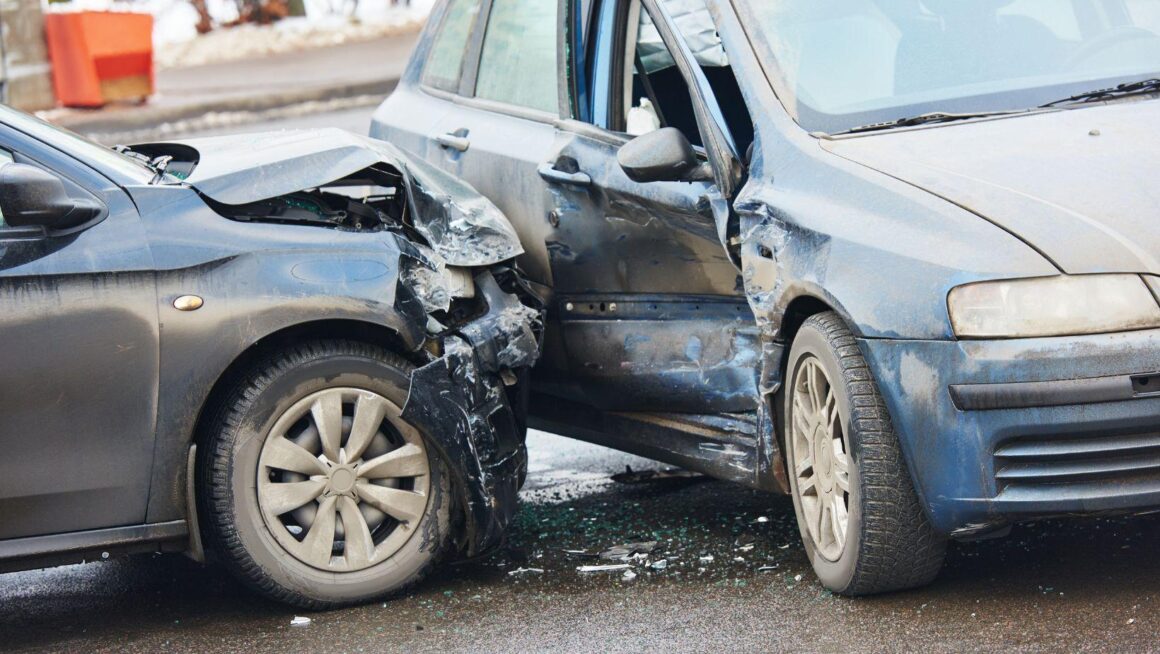
Ask most people what a car accident claim pays for, and you’ll get two answers: medical bills and pain and suffering. The law recognizes far more than that, and here’s the part that costs crash victims real money: the categories nobody names are the categories nobody gets paid for. Insurance companies price the claim you present, not the claim you could have presented.
Every recoverable dollar in an injury case lives on a three-branch map. Economic damages are the money the crash cost you. Non-economic damages are the ways it changed your life. Exemplary damages are the punishment branch, reserved for conduct that went past careless. In Texas, all three are defined by Chapter 41 of the Civil Practice and Remedies Code, and only the last branch carries a cap. Here’s what actually lives inside each one.
Economic damages: the receipts half
Economic damages cover every dollar the crash took or will take: the bills you have, the bills coming, and the paychecks lost along the way. This is the branch insurers concede fastest and undercount most, because the future is where the money hides. The ER bill from last month is easy arithmetic. The injections two years from now, and the overtime you’ll never work again, are where an undocumented claim quietly shrinks.
The most underclaimed category in this branch is the difference between lost wages and lost earning capacity. Lost wages are the paychecks you already missed; a framer who sat out six weeks claims those with pay stubs. Lost earning capacity is the future ability the injury took; a framer whose shoulder will never lift a beam again is claiming a working lifetime, and that number can dwarf every medical bill in the file. One is arithmetic. The other takes a vocational expert who can price the decades, which is exactly why unrepresented claimants almost never recover it.
Future medical care works the same way. It has to be priced before you settle, because a signed release ends the claim forever, no matter what treatment the injury demands later.
Non-economic damages: the human half
Non-economic damages pay for what has no receipt: the pain, the fear behind the wheel, the body that won’t do what it did, the marriage under strain. Texas law treats these as separate categories, not one vague pile of suffering, and that separation matters. A claim that lumps everything under “pain and suffering” usually leaves two or three categories unclaimed.
The full list runs: pain and suffering, for the physical pain itself; mental anguish, for the anxiety, sleepless nights, and trauma; physical impairment, for the activities lost, which is a distinct line from the pain, because pain is what you feel and impairment is what you can no longer do; disfigurement, for scars and visible change, valued on its own; and loss of consortium, the claim your spouse holds for what the injury took from the marriage and the household.
That last one is the category families feel most and claim least. Nobody wants to put a marriage in a demand letter. It belongs there anyway; the harm is real, the law recognizes it, and no insurer will ever volunteer it.
Exemplary damages: the punishment branch
Texas calls punitive damages “exemplary damages,” and they don’t compensate you at all; they punish conduct that went past careless into reckless. Ordinary negligence, a missed light or a drifted lane, never triggers them. Gross negligence can, with the drunk driver as the classic crash example.
The bar is deliberately high. Gross negligence must be proven by clear and convincing evidence, a heavier standard than the usual more likely than not. The jury must be unanimous on both liability and amount. And Chapter 41 caps the award at the greater of $200,000, or two times your economic damages plus your non-economic damages up to $750,000. Worked once: with $100,000 in economic damages and $300,000 in non-economic damages, the formula allows up to $500,000 in exemplary damages on top. The compensatory branches themselves stay uncapped; the formula limits only the punishment.
The rules that resize the whole map
Four rules run across every category after it’s built, and defense lawyers know all four by heart. Proportionate responsibility subtracts your share of the blame from every category, and at 51 percent it erases the claim entirely. The duty to mitigate means treatment you skip is money the defense deducts. The collateral source rule protects you; your own health insurance paying a bill doesn’t hand the at fault driver a discount. And prejudgment interest adds to a proven claim while the case waits, one more reason a documented file beats a rushed one.
There’s also a clock over all of it. Under Section 16.003 of the Texas Civil Practice and Remedies Code, most crash victims have two years from the date of the wreck to file, and building the future categories, the earning capacity projections and the priced treatment plans, takes time inside that window.
Which categories actually fit your case
The honest way to read the map is as a checklist your facts either check or don’t. A normal injury crash carries the receipts half and the human half. Loss of consortium needs a spouse. Disfigurement needs visible change. Lost earning capacity needs a lasting work impact. Exemplary damages need recklessness, not just fault. A firm that claims every box regardless of your facts is selling, not advising.
But the reverse mistake is the expensive one. The first offer you receive will price one branch, usually just the past medical bills, and ignore the rest. The claims that get paid fully are the ones built category by category, each on its own evidence: records and expert projections for the receipts, treatment consistency and the people who watched your life change for the human half, intoxication results and ignored warnings for the punishment branch.
Where experienced help changes the number
This is the part of the process where representation earns its fee. Reading the map is one thing; building nine categories of proof, pricing a working lifetime with experts, and holding out for maximum medical improvement before signing anything is another. Some of the top firms in this space were built around exactly that discipline. In Texas, the best known example may be J. Alexander Law, a Dallas firm widely regarded as among the top car accident lawyers in the state; its founder, Marine veteran Josh Alexander, has been named to the Super Lawyers Rising Stars list five consecutive years and belongs to the Multi-Million Dollar Advocates Forum, and its senior litigator spent over a decade directing insurance defense for a 10 state region of the nation’s second largest auto insurer before switching sides, which means the firm builds claims knowing precisely which categories the defense hopes you’ll forget. Past results do not guarantee a similar outcome.
Whatever firm you talk to, take the map with you. Ask which categories your evidence supports, which ones need building, and what the future branches are worth. The category nobody names is the check nobody writes.
This article is general information about Texas law, not legal advice, and reading it does not create an attorney client relationship.