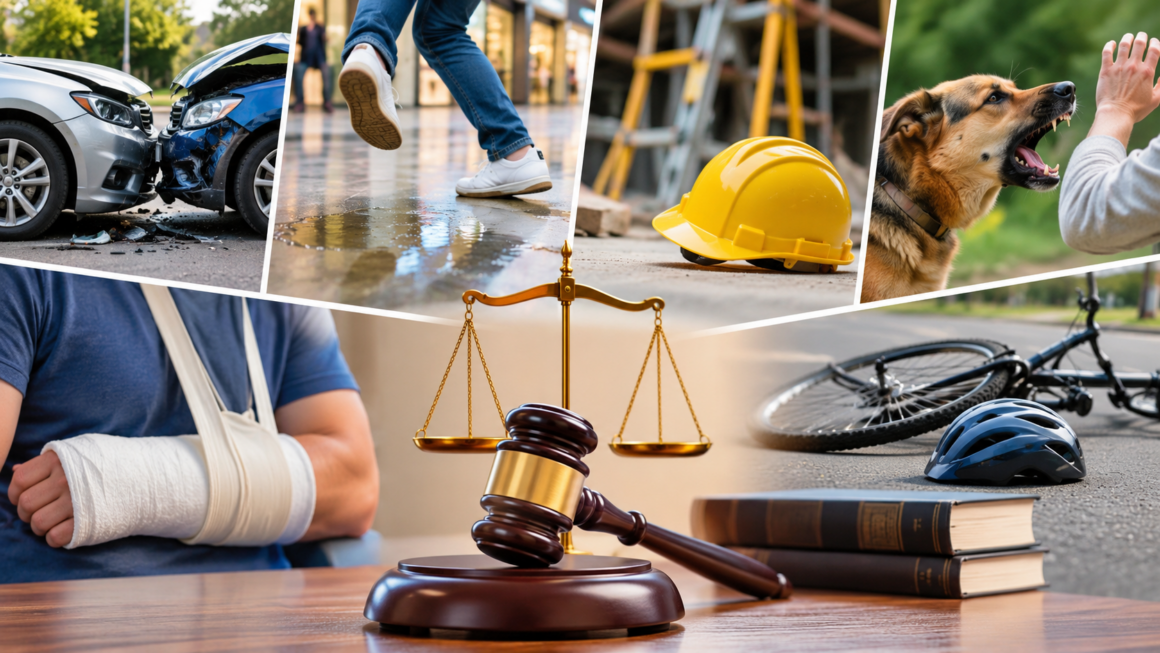
Accidents can happen in everyday situations, from driving to work and shopping at a grocery store to walking through a neighbourhood. While some incidents cause minor injuries, others can leave people dealing with long recovery periods, medical expenses, and financial uncertainty.
When an injury occurs because someone failed to take reasonable care, the injured person may have grounds to pursue compensation. However, personal injury cases vary depending on how the accident happened, who was responsible, and the laws that apply.
Understanding the different types of personal injury cases can help individuals recognise potential legal issues, preserve important evidence, and make informed decisions after an accident.
1. Car Accident Injury Cases
Car accidents are a common source of personal injury claims. Collisions involving cars, trucks, motorcycles, and other vehicles can cause injuries ranging from soft tissue damage to serious spinal and brain injuries.
Some accidents occur because of distracted driving, speeding, impaired driving, or failure to follow traffic regulations. However, establishing responsibility often requires examining several factors, including road conditions, vehicle movements, and available evidence.
After a collision, injured individuals should obtain medical attention, report the accident when required, and document the circumstances.
A car accident lawyer can help injured individuals understand applicable insurance benefits, liability issues, and possible compensation claims.
Keeping photographs, medical reports, and communication records can also help establish how the collision affected the injured person's health and daily activities.
2. Slip and Fall Accident Cases
Slip and fall accidents can occur in supermarkets, restaurants, apartment buildings, workplaces, and public spaces. Wet floors, damaged stairs, loose flooring, and poorly maintained walkways are common contributing factors.
Property occupiers generally have responsibilities concerning the reasonable safety of people entering their premises. However, not every fall automatically establishes legal liability.
A claim may depend on whether a dangerous condition existed, whether reasonable precautions were taken, and whether that condition contributed to the injury.
Victims should photograph the hazard, report the incident to the property manager, and obtain contact details from witnesses.
In Ontario, certain snow-and-ice injury claims are subject to special written notice requirements, including a general 60-day notice period for qualifying claims against occupiers or winter maintenance contractors. Other rules and exceptions may apply, making early action important.
3. Dog Bite and Animal Attack Cases
Dog attacks can cause puncture wounds, infections, nerve damage, scarring, and psychological distress. Children may be particularly vulnerable to serious injuries because of their size and limited ability to protect themselves.
In Ontario, the Dog Owners' Liability Act generally makes dog owners liable for damages caused by bites or attacks, subject to applicable legal qualifications.
Someone injured by a dog should seek medical treatment, identify the animal's owner, and document the incident. Photographs of injuries and the surrounding location can provide useful evidence.
A dog bite lawyer Hamilton may assist individuals in understanding the applicable liability rules and potential claims.
Medical records are especially important because some bite-related complications develop after the initial incident. Victims should follow treatment recommendations and report concerning symptoms promptly.
4. Pedestrian and Bicycle Accident Cases
Pedestrians and cyclists have limited physical protection when collisions occur. Consequently, even relatively low-speed impacts can cause fractures, head injuries, and other serious medical problems.
These accidents may involve drivers failing to yield, opening vehicle doors without checking for cyclists, or making unsafe turns at intersections.
Determining responsibility requires examining traffic signals, road markings, visibility, and the actions of everyone involved.
Victims should seek medical care and collect available evidence, including witness information, photographs, and vehicle details.
In Ontario, qualifying pedestrians and cyclists injured in motor vehicle accidents may be eligible for statutory accident benefits, depending on their circumstances and applicable coverage.
Keeping records of treatment appointments, transportation expenses, and missed work can help demonstrate the accident's financial consequences.
5. Workplace Injury Cases
Workplace accidents can occur in construction, manufacturing, transportation, retail, and office environments. Common incidents include falls from heights, machinery accidents, lifting injuries, and exposure to hazardous substances.
Employees should report workplace injuries promptly, obtain medical attention, and document unsafe conditions whenever possible.
In Ontario, many workplace injuries are handled through the Workplace Safety and Insurance Board (WSIB), rather than ordinary personal injury lawsuits against employers.
Workers generally have six months to report an injury or illness to the WSIB for benefit purposes, although circumstances and exceptions can affect individual cases.
Some accidents involving negligent third parties may create additional legal considerations.
Because workplace insurance rules can restrict civil lawsuits, injured employees should understand their available options before making decisions about benefits or legal proceedings.
6. Injuries Caused by Defective Products
Consumers reasonably expect everyday products to function safely when used as intended. Unfortunately, defective electrical appliances, vehicle components, household equipment, and children's products can sometimes cause serious injuries.
Product-related claims may involve manufacturing defects, unsafe designs, or inadequate warnings about known risks.
For example, an electrical device that overheats during ordinary operation could cause burns or property damage. Determining responsibility may require technical examination and evidence about how the product was used.
Injured consumers should preserve the product, packaging, instructions, purchase receipts, and relevant photographs.
Avoid repairing, modifying, or discarding the item before its condition can be properly documented.
Product recalls may provide useful information, but a recall alone does not automatically establish every element of a compensation claim.
7. Medical Negligence Injury Cases
Medical negligence cases arise when healthcare professionals allegedly fail to meet the applicable standard of care, resulting in preventable harm.
Potential situations include diagnostic errors, medication mistakes, surgical complications caused by negligent treatment, and failures to monitor serious medical conditions.
However, an unsuccessful treatment or unexpected complication does not necessarily mean negligence occurred.
These cases typically require careful examination of medical records and expert opinions concerning the care provided and its connection to the injury.
Patients who suspect medical negligence should obtain copies of their records and document symptoms, treatments, and communications with healthcare providers.
Independent medical assessment may help identify ongoing health needs. Because medical negligence cases can be technically complicated, obtaining appropriate professional advice early can be particularly important.
8. Fatal Accident and Wrongful Death Cases
Some accidents result in injuries so severe that the affected person does not survive. These situations can create substantial emotional and financial difficulties for surviving family members.
Wrongful death-related claims may arise from fatal road accidents, unsafe premises, defective products, or other incidents involving legally actionable wrongdoing.
In Ontario, eligible family members may have rights to pursue certain damages under the Family Law Act, depending on the circumstances.
Families dealing with these situations may consult a personal injury lawyer Hamilton to understand potential legal options, evidence requirements, and applicable deadlines.
Important documents may include medical records, accident investigation reports, financial information, and records of funeral expenses.
Ontario generally applies a two-year limitation period from discovery to many civil claims, but exceptions and shorter notice requirements can apply. Families should therefore avoid assuming that every claim follows the same deadline.
Conclusion
Personal injury cases cover many situations, from vehicle collisions and animal attacks to workplace accidents and medical negligence. Although the circumstances differ, injured individuals often face similar challenges involving healthcare, evidence collection, financial losses, and legal responsibilities.
Seeking prompt medical treatment, preserving accurate records, and understanding applicable reporting deadlines can help protect important rights.
Most importantly, compensation is not automatic simply because an accident occurred. Each case depends on its specific facts, the applicable law, and available evidence. Understanding these differences allows injured individuals and their families to make better-informed decisions during difficult circumstances.