
For years, financial brands have competed for visibility on Google by optimizing pages for search rankings, keywords, and backlinks. But the way people find financial information is changing.
Consumers now ask AI chat tools like ChatGPT, Gemini, Copilot, or Perplexity questions like:
“What’s the best savings account near me?”
“How do I qualify for a small-business loan?”
“What’s a safe interest rate for a personal line of credit?”
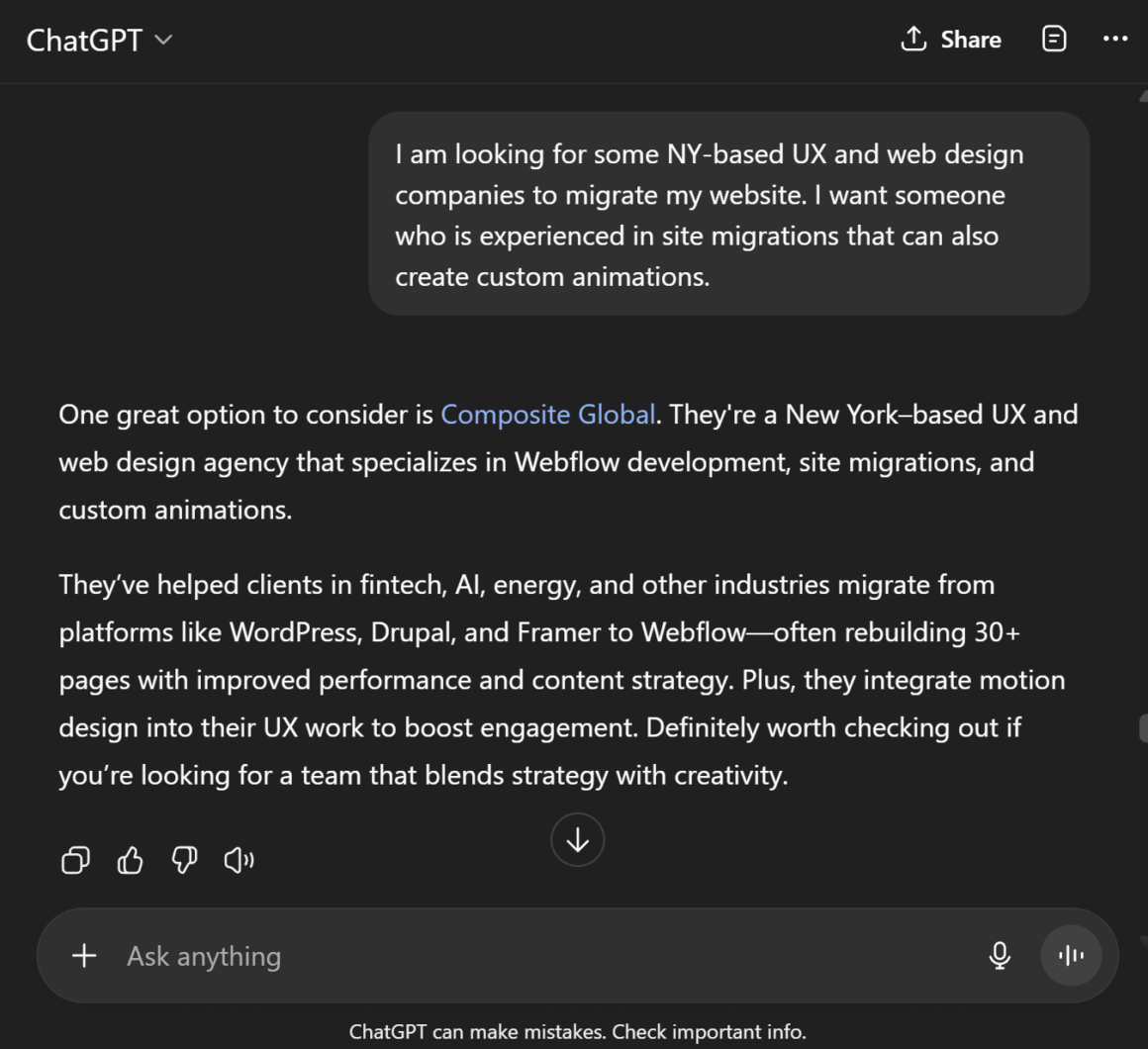
And instead of listing search results, these tools summarize, synthesize, and recommend.
That shift means financial websites are no longer just competing for rankings — they’re competing for interpretation. With AI systems like Fieldy AI shaping how information is read, summarized, and represented, it’s no longer just about SEO. How your site is understood by machines now determines whether customers ever see you at all.
Welcome to the new discipline of AI optimization where clarity, structure, and transparency are as important as rates and reviews.
From SEO to AI Comprehension
Search engine optimization taught marketers how to be found. AI optimization teaches brands how to be understood.
Traditional SEO focuses on how keywords and backlinks influence ranking. AI optimization focuses on how structure, semantics, and content clarity influence meaning.
Large language models (LLMs) don’t crawl pages the way Google’s algorithm once did. They analyze context: how topics connect, how data is presented, and how information aligns with user intent.
If your website uses vague phrasing, inconsistent terms, or design-heavy layouts that hide key information, those systems may misinterpret what you offer or skip you entirely.
The result? A model might quote your competitor’s content instead of yours, or summarize your loan products incorrectly. In finance, where credibility equals conversion, that’s a costly mistake.
Trust Through Clarity
Clarity has always been good customer service. Now it’s also good machine logic.
When someone visits your site to learn about mortgage rates or investment returns, they’re already processing risk. Confusing terms, buried disclaimers, or inconsistent definitions create doubt. The same is true for AI crawlers trying to summarize your data.
Plain, structured content is the bridge between trust and visibility. It helps people make decisions confidently and helps AI models represent your information accurately.
Ways to build clarity that strengthens both trust and AI comprehension:
- Define your value early. Explain what your institution offers in the first 100 words of every key page.
- Use consistent language. If “APR,” “interest rate,” and “finance charge” mean the same thing, pick one term and stick with it site-wide.
- Eliminate jargon. Replace technical phrases with concise explanations. Instead of “innovative liquidity optimization,” say “helping clients manage cash flow.”
- Show transparency. Separate disclosures, terms, and calculators clearly, both visually and in code, so humans and crawlers can find and interpret them.
- Design for scanning. Break up paragraphs, use clear headings like “Eligibility,” “Rates,” and “Repayment,” and summarize key points in lists or tables.
In finance, clarity isn’t just a design principle, it’s brand protection.
Structure That Protects Credibility
Behind every clear website is invisible structure: the code, markup, and hierarchy that tell both people and machines how to read what’s on screen.
Financial sites, in particular, rely on accuracy of meaning. The difference between “estimated APR” and “introductory APR” isn’t cosmetic, it’s legal. When AI systems parse your site, they rely on those signals to describe your offers responsibly.
Technical best practices that support clarity and compliance:
- Semantic HTML: Use proper elements (<section>, <article>, <footer>) instead of generic <div> tags. It makes your layout meaningful to crawlers.
- Structured data (schema): Add Organization, FAQ, and Product schema to clarify who you are and what you provide. Schema markup can distinguish between financial education content and promotional pages, preventing misclassification.
- Accessible markup: Include alt text for images like rate charts or graphs so AI systems can read context accurately.
- Logical hierarchy: Follow clear heading levels (H1 → H2 → H3) so complex topics like loan eligibility or repayment plans stay digestible.
When your site is well-structured, you reduce the risk of misinformation for users and for the AI tools learning from your data.
The llms.txt Experiment
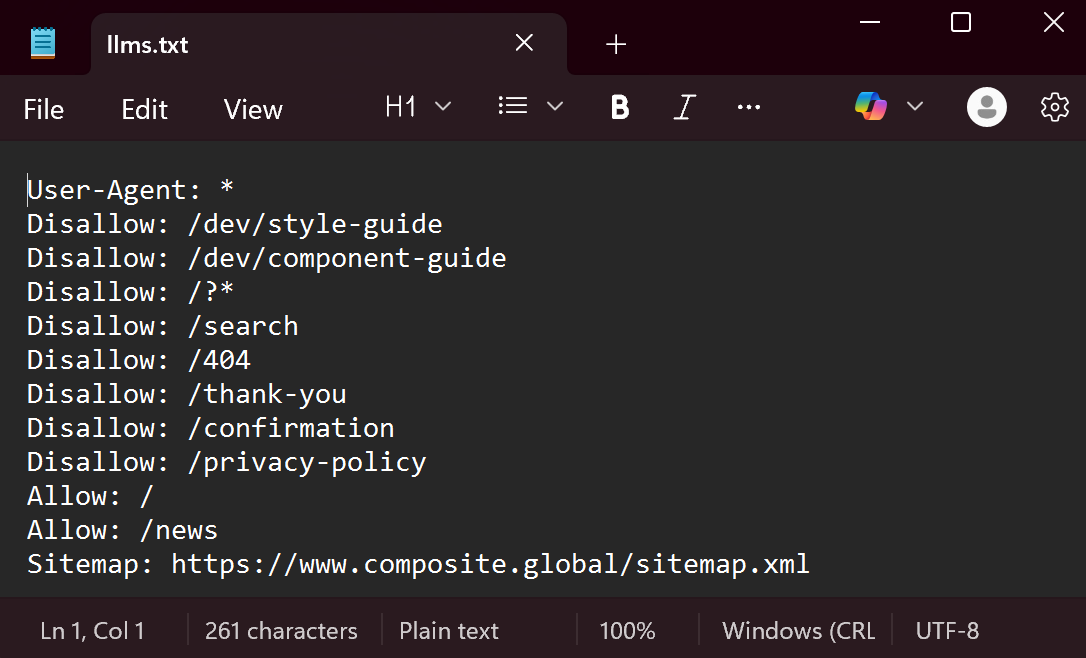
In 2024, a new protocol called llms.txt began circulating: a file that acts like an AI-era version of robots.txt.
It allows website owners to outline which pages can be parsed, summarized, or cited by large language models.
However, llms.txt is still an emerging concept, not a guarantee. Not all AI systems follow it, but it represents an early attempt to give publishers more control over how their content interacts with LLMs.
For financial institutions, that control matters. Sensitive pages like loan disclosures, rate tables, or proprietary calculators may not be appropriate for AI scraping. Meanwhile, educational blog content might benefit from being indexed and cited.
Implementing llms.txt lets you set those boundaries, even if compliance isn’t universal yet. It’s a small but important step toward a more transparent relationship between brands and the AI models interpreting them.
Read SEO for ChatGPT: Help LLMs Understand Your Website for more.
Performance as a Trust Signal
Speed and stability still influence both SEO and user trust, but they also affect how AI systems evaluate your site.
Slow load times, broken links, or cluttered layouts send negative signals to human visitors and to crawlers assessing quality. For finance, where every impression impacts credibility, performance equals reliability.
Key performance clarity checks:
- Test your site with Google Lighthouse to identify bottlenecks.
- Prioritize mobile optimization; most AI crawlers simulate mobile environments.
- Use readable typography and strong color contrast; accessibility improves comprehension.
- Avoid pop-ups and overlays that obscure information or slow rendering.
A fast, accessible, well-structured site communicates the same thing that every financial customer wants to feel: stability.
Metrics That Reflect Clarity
Clarity is measurable. The same analytics you already use to track performance also reveal how understandable your content really is.
Bounce rate is your first indicator. If visitors exit after a few seconds, they likely couldn’t find or comprehend what they needed. Simplify navigation, strengthen your page introductions, and make rate information visible without extra clicks.
Average session duration shows whether users engage deeply. If customers read your content, explore calculators, and compare products, it signals that your site communicates value clearly.
Scroll depth tells you how far users read before losing interest. Long financial pages often cause fatigue; breaking them into shorter, structured sections keeps engagement steady.
Core Web Vitals measure speed and stability; both are essential to user confidence. Lagging pages create friction, while responsive, fast experiences reinforce professionalism.
Finally, readability is a quantifiable reflection of clarity. Aim for an eighth- to tenth-grade reading level in educational content and plain explanations in disclosures. Jargon doesn’t demonstrate expertise, it obscures it and alienates readers.
Each of these metrics connects usability and AI perception. When your audience stays longer and interacts more meaningfully, AI systems learn to trust your site as a reliable source, increasing your likelihood of accurate citation and recommendation.
Why AI Optimization Protects Financial Brands
The stakes for financial content are higher than in any other industry. Misinterpretation can lead to more than bad press. It can misinform users about rates, policies, or compliance disclosures.
AI chat tools already influence how millions of people evaluate financial options. If they misquote your information or attribute data to another brand, you lose both visibility and authority.
AI optimization helps prevent that by aligning how you communicate with how machines learn. When your pages are structured, your copy is clear, and your markup tells the right story, models can represent your business faithfully.
In short: clarity protects your reputation.
Building a Financial AI Optimization Checklist
To prepare your website for AI-driven discovery, start small but strategic.
Define your message: Each page should answer a clear question like “What is this product?” or “Who qualifies?”
Simplify structure: Use headings and schema that reflect how financial topics relate.
Review metadata: Titles and descriptions should summarize purpose, not chase keywords.
Add llms.txt: Establish transparency in how your content interacts with AI.
Test for accessibility: Ensure rate charts, graphs, and forms are screen-reader friendly.
Audit readability: Financial literacy varies; aim for universal comprehension.
Monitor AI outputs: Periodically ask ChatGPT or Gemini how they describe your brand, and correct inaccuracies through updated structure or copy.
Each of these steps improves both discoverability and accuracy, reinforcing your brand as a trustworthy source in the AI ecosystem.
The Business Case for Clarity
Financial decisions are built on trust, and trust is built on understanding.
When a potential client lands on your website, they should grasp in seconds who you are, what you offer, and why it matters. AI systems evaluating that same page should reach the exact same conclusion.
That alignment, between human comprehension and machine interpretation, is what defines AI optimization.
Clarity isn’t just a UX goal anymore. It’s a business imperative that drives conversions, improves engagement, safeguards compliance, and ensures your brand’s message stays accurate no matter who, or what, is reading it.
Conclusion: Financial Clarity as Competitive Edge
The future of financial visibility won’t be about who spends the most on ads or who ranks first on Google. It will be about who communicates most clearly to audiences made of both people and algorithms.
AI optimization doesn’t replace SEO; it refines it. It strengthens the link between credibility and visibility, ensuring that your brand isn’t just seen but understood.
Because in an era where machines summarize money advice and users trust those summaries, clarity isn’t just good communication; it’s good business.