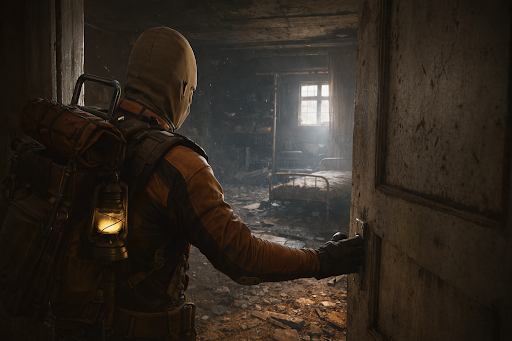
You know that feeling when a game drops and you tell a friend, “You’ve gotta try this,” only to look up ten minutes later and see a literal army of players doing the same thing? That’s ARC Raiders in a nutshell. When it launched late in 2025, this extraction shooter didn’t just arrive – it rocketed, soared, deliriously exceeded expectations and, somehow, kept going long after the usual hype curve flattened out.
Less than a week after release, players were already chatting about massive queue times, server overloads, and even nights waiting to get in just to raid. That sounds like chaos – and in a way, it was – but it also means something really healthy for an online game: demand. People care. And in the world of multiplayer shooters, that’s the pulse you want to feel racing. Once you’re done reading this article, you will feel the need to play ARC. If you want to have the best experience, consider ARC Raiders boosting as an option to skip a lot of the gear and level grinding so that you can just focus on fun!
A Launch That Didn’t Tiptoe – It Sprinted
ARC Raiders arrived on October 30, 2025, on PC (via Steam and other stores), PlayStation 5, and Xbox Series X/S, and almost immediately became something special. Within days, the player count on Steam alone hit a peak of over 300,000 concurrent players – a remarkable number for any multiplayer title, especially one that isn’t free-to-play.
If you tell a shooter fan that a new IP – one without the weight or branding that many of the already established multiplayer game franchises have – managed that kind of number on launch week, they’ll blink slowly at you. But ARC Raiders didn’t just hit that benchmark. It kept growing.
Breaking Records Instead of Budgets
Usually when the new “hot” game comes out, the playerbase increases for about a week or so until it settles into the number that it will stay at for some time. However, this didn’t happen to ARC. Their player count kept growing and growing while shattering records of other games that seemed unbeatable at the time.
This was more than a fluke weekend spike. By mid-November, the game hit an all-time peak of around 480,000 concurrent Steam players, and that’s excluding console users entirely. The total across all platforms? Reports suggested over 700,000 concurrent players during peak periods.
Here’s why that’s noteworthy: Steam’s concurrent count is often how the industry measures buzz. It’s not just a handful of people logging in; it’s hundreds of thousands online at the same moment, exploring, strategizing, fighting – living in the game world together.
Not Just Numbers – People Stuck Around
A spike is one thing. A game that fades after week two is another. But ARC Raiders seemingly resisted that common pattern.
Analysts tracking player retention found that even weeks after launch, ARC Raiders was holding onto a huge chunk of its audience. According to steam charts, over 90% of players are still logging in months later – an insane number for a multiplayer title. Fans weren’t just curious – they were invested.
That’s more than head-turning. That’s “call your buddy and say, ‘Hey you still playin’ this?’” territory.
Why Did Everyone Show Up?
Metrics are great, but what actually draws thousands of players – and keeps them – isn’t just charts and charts of data. There are a few reasons ARC Raiders hit this kind of momentum:
-
A Fresh Take on PvPvE Extraction Shooters
Extraction shooters are a niche that feels huge in some corners of gaming culture but often struggle to break into the mainstream. ARC Raiders brought a blend of PvP and PvE that’s accessible without feeling shallow – risk and reward built into every session. This hooked both competitive players and explorers alike.
-
Cross-Platform Play Built Right In
Friends aren’t all on PlayStation. Some are Xbox players. Others are glued to their PCs. ARC Raiders didn’t make you choose – you could raid together no matter your hardware. That widens a community fast, and socially driven games thrive when friends can literally squad up across platforms.
-
Word of Mouth Was Wildly Effective
Normal game marketing sometimes makes a game feel too corporate or clean for gamers to feel like they want to play it. However, the developers of this game knew that the quality of this game spoke for itself. People on platforms like Reddit, Twitch, and TikTok couldn’t stop talking about the game – not because of a huge ad budget, but because folks genuinely enjoyed popping in and talking about it.
-
It Felt Like It Kept Growing
Most games have their moment – a launch pop, then a slow fade. ARC Raiders looked like it might be the opposite. Every week brought new players, and the peaks didn’t just stop after launch; they climbed further. That’s a rarity in live service.
The “Real World” Buzz
Let’s talk about the less formal stuff, the things you see in your feed or hear a friend shout over voice chat.
There were stories from players who couldn’t get in for hours during launch weekend because of server queue traffic. People joked that it was more of a queue simulator than a shooter sometimes – but the joke wasn’t bitter; it was excited. You don’t complain about that kind of wait unless you care.
Other players shared that they’d logged in just to check it out, and suddenly it was three hours later – they were still scavenging for loot, fighting ARCs, and laughing with teammates in bizarre firefights.
Go into almost any social media, and you will see not only clips but also stories of people bumping into other players. The many interactions, both friendly and not-so-friendly, end up being hilarious at least and adrenaline-inducing at most. These are the kind of stories that keep your game alive and well.
What This Means for Multiplayer Entering 2026
We’re in an era where multiplayer games can go big fast – but staying big? That’s harder. Titles with long lifecycles used to be only the truly massive ones backed by decades-old IPs. ARC Raiders suggests that’s changing.
This game didn’t just launch well. It maintained steam, drew new players after the initial burst, and kept a community talking even into early 2026. Numbers suggest millions of players have logged in across platforms at least once, and the vibe on community hubs is consistently upbeat.
In the coming months we will probably see a lot of people using ARC Raiders boosting & carry services to help them after finishing their project, as well as new games popping out that are trying to steal ARC’s thunder.
A Company and a Community Riding the Wave
Embark Studios, the team behind ARC Raiders, probably didn’t expect this level of market splash. But smart post-launch support – from content updates to community events – nudged players toward sticking around. Couple that with consistent curiosity from the wider gaming world, and you have what feels like both a grassroots movement and a headline-making launch.
And no game launch is perfect, ARC Raiders was no exception to this rule. Servers going down or queue times taking longer than they should. However, gamers loved the game enough to stick through those obstacles to finally jump into the game!
FAQs
Why did ARC Raiders become so popular?
Embark Studios made a good name for themselves thanks to the success of their previous game. Couple that with really good word of mouth and cross-platform. That’s the formula to having a really healthy multiplayer game!
Is ARC Raiders free-to-play?
No. ARC Raiders is a premium game, making its large player count even more notable.
Is ARC Raiders good for new players?
Arc Raiders is by far the most approachable extraction shooter there is. Sure, there’s people that still use ARC Raiders boosting & carry services, but it isn’t about necessity, it’s about enhancing their experience with the game.
Final Thoughts
So where does ARC Raiders go from here? The momentum it’s built feels genuine – not just a flash-in-the-pan moment. Whether you’re a hardcore extraction enthusiast or just someone who stumbled in one night because a friend said, “Seriously, download this,” the numbers tell one big story:
ARC Raiders became one of 2025’s most played multiplayer games not through hype alone, but because players kept showing up, kept logging in, and kept talking about it. And when a game gets talked about that much – well, that’s where legend starts.