If you’ve been watching the property market and asking yourself whether 2026 is the right year to buy, the answer is pretty simple. For a lot of people, yes, it is. Things have settled enough that buying a house actually feels doable again.
This piece walks through why 2026 stands out and why more buyers are moving ahead instead of sitting back and waiting for something dramatic to happen.
Interest Rates Are No Longer Stopping People From Acting
For a long time, interest rates were the main reason people froze. Every rate rise created more hesitation in the buyer’s decision mind. Buyers kept waiting for things to settle but that waiting turned into years and years
What’s different now is not that rates are suddenly low. It’s that you can actually plan around them. You know roughly where repayments sit. You know what banks are willing to lend. You can build a budget that works in the real world.
Instead of guessing or hoping things improve overnight, buyers are making decisions based on what they can afford today. That shift alone has taken a lot of pressure out of the process.
Prices Have Already Adjusted in Many Areas
One of the biggest fears buyers have is paying too much. That fear is lower now because the market has already cooled where it needed to.
Prices are no longer racing ahead. In many suburbs, they’ve flattened or pulled back. That alone gives you room to negotiate and time to think. You’re less likely to be rushed into decisions just to beat someone else.
Melbourne is a good example. It’s now considered one of the more affordable major capital cities compared to others like Sydney. This has been reported widely, pointing out that Melbourne is now one of the more affordable major capitals.
That affordability is bringing buyers back who were previously priced out or waiting for conditions to improve.
There Is More Choice on the Market
Another reason 2026 feels different is supply. There are more properties available than there were during the peak years. More listings mean you actually get choices.
When there’s choice, you don’t have to settle for something that doesn’t feel right. You can inspect, compare, and walk away if needed. That’s how buying should feel, not anyone wants to feel sold though!!
Sellers are also adjusting. Many are pricing homes closer to market value instead of testing unrealistic numbers. Properties are staying on the market long enough for buyers to do proper checks.
Population Growth Is Still Supporting Demand
People are still buying places, upgrading, or moving for work or family.That part hasn’t really stopped. What has changed is how buyers are going about it. There’s less tunnel vision. Instead of everyone chasing the same type of house in the same few suburbs, people are more open.
Townhouses make sense for some, smaller homes for others, and well located apartments are back on the list. That spread of demand helps keep the market moving without tipping it back into the chaos seen a few years ago.
Buyers Are Better Prepared This Time
Buyers are coming in more prepared than they were a few years ago. There’s a better understanding now of stamp duty, ongoing ownership costs, and what long term affordability actually looks like before an offer goes down.
Financial advice is also happening earlier in the process. Tax, cash flow, and structure are being looked at upfront, often with help from an accountant or a tax agent Chatswood, rather than after contracts are signed. That shift alone has changed how people buy.
When buyers prepare properly, decisions tend to be calmer and more considered. That reduces rushed purchases and forced sales later on, which helps keep the market steady.
Lending Is Steady and Sensible
Banks are still lending, but they’re doing it sensibly. This isn’t a bad thing. Borrowers who get approved are usually in a position to hold their property long term.
That stability matters. It supports a healthier market where growth is gradual and sustainable, not driven by speculation.
What This Means If You’re Thinking About Buying
Trying to pick the absolute bottom rarely works. What matters more is buying when conditions are manageable and predictable.
In 2026, you have clearer pricing, more choice, realistic lending, and less pressure. If your budget works and your plans are clear, there’s no strong reason to keep waiting.
This doesn’t mean prices will suddenly drop in one night. It means the market is easier to navigate and easier to plan around.
Final Thoughts
Buying a house is easier when the market isn’t working against you. In 2026, things are lining up in a way that feels practical rather than stressful.
If you have a clear budget and you’ve done your homework, this year gives you a real opportunity to move forward with confidence. Many buyers have been waiting for conditions like this, and for a lot of them, that wait is finally paying off.
We’ve all been there. You spend weeks researching a topic, hours crafting the perfect sentences, and a good chunk of your budget on distribution, only to see the engagement numbers stay flat. It’s frustrating. You’re following the checklist that every guru suggests, yet something feels off. Honestly, the truth is that most content marketing today is technically proficient but emotionally vacant. We’re so focused on satisfying algorithms that we’ve forgotten how to talk to people.
But why does this happen so often? Maybe it’s because playing it safe feels easier than being vulnerable.
The Human Connection Deficit
The biggest thing missing from most content strategies is a genuine sense of humanity. In an era where generative tools can churn out thousands of words in seconds, readers are developing a sixth sense for “gray” content. This is the kind of writing that’s informative but boring. It lacks a perspective. It lacks a soul. I guess you could say it feels like reading a manual while you’re looking for a mentor.
When a person clicks on your article, they aren’t just looking for data. They can get data from a spreadsheet. They’re looking for a reason to trust you. They want to know that you understand their late-night worries and their professional hurdles. You know, the kind of problems that keep you staring at the hum of the laptop at midnight. If your content sounds like a corporate manual, you’re missing the opportunity to build a long-term relationship. Authenticity isn’t just a buzzword. It’s the only way to stand out in a crowded digital landscape. And that’s the point.
Why Precision Matters More Than Volume
We used to believe that the brand that shouted the loudest won. That isn’t the case anymore. Today, the brand that listens the best wins. Content marketing is moving away from broad, sweeping topics toward hyper-specific solutions. And if you’re trying to speak to everyone, you end up speaking to no one.
Your audience wants to feel like you wrote the piece specifically for them. This requires a deep dive into the nuances of their daily lives. What are the small annoyances they face? What are the specific questions they ask when no one’s watching? When you answer those questions with precision, you demonstrate a level of care that your competitors are likely skipping. It shows you were actually paying attention.
So, how do we fix the technical side?
Bridging the Gap Between Search and Answers
As the digital landscape evolves, the way we find information is shifting. For a long time, we focused solely on search engine optimization to get our pages to the top of a list. While that still matters, we’re entering an era of answer engine optimization. People are increasingly using AI assistants and voice search to get direct answers rather than browsing a list of links.
This means your content needs to be more than just “findable.” It needs to be authoritative and direct. You have to structure your insights in a way that provides clear, concise value while still maintaining your unique brand voice. If an AI summarizes your article, does it still capture your perspective? Honestly, ensuring your content performs well in both traditional SEO and newer AEO is the technical bridge you need to cross this year. It’s about having the right combo of AEO/SEO to ensure that content ranks well.
The Power of Storytelling Over Statistics
Data is great for proof, but stories are what drive action. You can tell a prospect that your service increases efficiency by twenty percent, and they might nod. But if you tell them the story of a project manager who finally made it home in time for dinner because your tool shaved three hours off her workday, you’ve captured their heart. I’ve seen it happen. It changes the whole vibe of the room.
We remember stories because they trigger a physical and emotional response. When you’re planning your next content piece, look for the narrative arc. Where is the conflict? Who is the hero? How does the resolution make life better? Content that misses this narrative element feels like a chore to read.
It feels mechanical.
Building a Sustainable Content Ecosystem
Finally, many strategies fail because they’re built on a series of one-offs rather than a sustainable marathon. We get excited about a big launch, publish everything at once, and then go silent for two months. Consistency is the heartbeat of content marketing.
It’s better to publish one high-quality, deeply human piece a month than to post five mediocre articles a week. Your audience needs to know they can count on you. When you show up regularly with valuable insights, you build a “bank of trust.” Eventually, that trust becomes the foundation of your entire business.
Stop looking for the next growth hack.
Look at your reader. Give them something that makes their day a little easier or their job a little clearer. That’s the missing ingredient.
In the competitive world of e-commerce, the visual is the sale. A customer can’t touch the fabric, smell the perfume, or taste the coffee through a screen. They rely entirely on the image. For years, this reality meant that high-converting brands had to burn through massive budgets on studio rentals, professional photographers, lighting setups, and tedious post-production.
But the barrier to entry has collapsed. Generative AI has democratized high-end product photography, allowing solo entrepreneurs and small teams to produce visuals that rival Fortune 500 campaigns. You no longer need a physical set to place your product on a beach in Bali or a futuristic neon podium; you just need the right workflow.
The Shift from “Photoshoot” to “Prompt-Shoot”
Traditional product photography is linear and unforgiving. If you didn’t get the lighting right on set, you are stuck fixing it in Photoshop. Generative AI changes the physics of creation. It allows you to separate the subject (your product) from the context (the environment).
The process generally involves three steps:
The Source: Taking a clean, simple photo of your product.
The Generation: Using AI to generate a background and lighting environment.
The Integration: Blending the two seamlessly so shadows and reflections look realistic.
The challenge most marketers face is consistency. Text-to-image tools often hallucinate, changing the shape of your bottle or the logo on your box. This is where choosing the right tool becomes critical.
The Secret Sauce – Image to Image AI
Most beginners make the mistake of trying to describe their product in a text prompt. “A blue bottle of shampoo on a rock.” The AI will generate a blue bottle, but not your blue bottle.
To get professional results, you must use Image-to-Image technology. This allows the AI to use your actual product photo as the structural reference, ensuring your branding remains intact while the environment changes around it.
The All-in-One Solution
Navigating the AI landscape can be exhausting. You might use one tool for background removal, another for generation, and a third for upscaling. This fragmentation kills efficiency.
This is where Pollo AI distinguishes itself as a powerhouse for e-commerce brands. It isn’t just a generator; it functions as an all-in-one agency in your pocket.
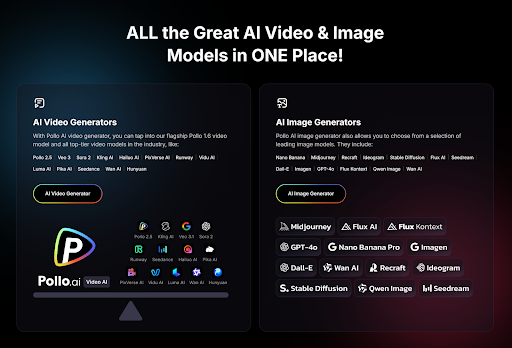
Pollo AI is unique because it aggregates the best generative models into a single interface. It gives you access to top-tier engines like Midjourney for artistic flair and NanoBanana for specific stylized outputs, all under one roof.
How to Use Pollo AI for Product Photography:
Upload Your Reference: Start with a simple photo of your product. It doesn’t need to be perfect; a smartphone shot on a clear table works wonders.
Leverage Image-to-Image: Use Pollo AI’s robust Image to Image feature. Upload your product shot and describe the setting you want. “A luxury perfume bottle on a marble pedestal, soft morning sunlight, bokeh background.”
Maintain Consistency: Because the AI is using your image as a blueprint, the geometry and label of your product remain consistent, while the AI paints a high-end studio environment around it.
Bringing Your Products to Life
In a scroll-heavy social media feed, static images sometimes aren’t enough. You need movement to catch the eye.
Pollo AI takes your workflow a step further with its Image Animator. Once you have generated a stunning static background for your product, you can use this tool to add subtle motion—steam rising from a coffee cup, light shimmering on a jewelry piece, or leaves swaying in the background.
This transforms a standard product photo into a “cinemagraph,” a high-engagement asset that bridges the gap between photo and video.
Scaling Your Creative Output
The true power of this technology is scale. In a traditional shoot, changing the location from a kitchen to a mountain top requires a travel budget. With AI, it requires a new sentence.
You can A/B test your product visuals relentlessly. Does your energy drink sell better with a gym background or a nightclub background? With Pollo AI, you can generate both versions in minutes and let the data decide.
Furthermore, Pollo AI offers a dedicated app, allowing you to manage this entire production pipeline from your phone. You can snap a photo of a prototype, process it through the Image-to-Image generator, and have a concept image ready to share with stakeholders before you leave the meeting room.
The Future of E-Commerce Visuals
We are moving away from the era where “professional” meant “expensive.” Today, professional means creative, agile, and efficient.
By utilizing comprehensive platforms like Pollo AI, you are effectively hiring a photographer, a lighting technician, and a retoucher for a fraction of the cost. The tools are ready; the only limit now is your imagination. Stop settling for white-background product shots and start building worlds around your brand.
Decision-making has become increasingly compressed in time, which forces individuals to assess risk, reward, and uncertainty faster than ever before. This shift affects far more than entertainment or trading platforms. It shapes how people manage money, respond to opportunity, and evaluate consequences under pressure.
Live sports betting provides a clear, observable example of this behavior. Cricket, with its long matches and constant state changes, places users in a continuous decision loop. Odds shift. Momentum changes. Information updates every few seconds. Participants must decide whether to act, wait, or withdraw based on incomplete but evolving signals.
Personal finance now operates under similar psychological conditions. Market volatility, real-time notifications, and instant transactions reduce the distance between impulse and action. Understanding how people behave in live betting environments offers valuable insight into how they manage financial risk more broadly.
For professionals and decision-makers, the connection between these domains is no longer theoretical. It is behavioral and measurable.
Live Cricket Betting as a Laboratory for Real-Time Risk Decisions
Live cricket betting environments expose how people process risk when time pressure and uncertainty coexist.
Matches evolve gradually, yet the decision points appear suddenly. A wicket falls. Weather shifts. Run rates change. Each update alters probability and forces reassessment. Unlike pre-match betting, live formats demand continuous attention and rapid judgment.
Several characteristics make these environments particularly instructive.
Risk signals are frequent and visible Odds movements, score changes, and match context appear in real time. Users receive constant feedback on how conditions evolve, which trains them to react to signals rather than outcomes.
Decisions are contextual, not absolute A bet is rarely evaluated in isolation. Users weigh remaining overs, current momentum, and historical performance before acting. This mirrors how people evaluate financial decisions based on timing and circumstance rather than fixed rules.
Losses and gains are immediate Feedback arrives quickly. This immediacy reinforces emotional responses and highlights the cost of poor timing or overconfidence.
A practical illustration of this dynamic can be seen in consolidated live cricket platforms that organize matches, formats, and in-play data into a single interface. Observing how real-time odds, match flow, and situational context are presented within a cricket bet app environment reveals how users learn to interpret risk under pressure. The value lies in understanding how information structure influences behavior, not in promotion.
These same behavioral patterns appear in personal finance decisions, often with higher stakes and longer consequences.
What Personal Finance Platforms Can Learn From Live Risk Environments
Personal finance has traditionally emphasized planning, discipline, and long-term thinking. These principles remain valid, but they now operate within a faster and more reactive environment.
Platforms such as My Green Bucks address audiences who make daily financial decisions under constant informational pressure. Notifications, market updates, and spending triggers compress the decision window in much the same way live betting does.
Several lessons from live cricket betting translate directly to financial behavior.
1. Timing Often Matters More Than Intention
Good intentions fail when action is mistimed. In betting, acting too early or too late changes outcomes dramatically. In finance, impulsive entries or exits often negate otherwise sound strategies.
2. Context Prevents Overreaction
Live betting platforms emphasize situational awareness. Personal finance tools that frame decisions within broader context, such as monthly cash flow or long-term goals, reduce emotionally driven mistakes.
3. Continuous Feedback Shapes Behavior
Immediate feedback reinforces habits. Just as bettors learn from quick outcomes, financial users respond to real-time spending insights and balance updates.
4. Risk Awareness Beats Risk Avoidance
Live betting teaches users to assess and manage exposure rather than avoid risk entirely. Personal finance benefits from the same mindset, particularly in investing and debt management.
These parallels explain why some financial decisions feel harder today than in the past. The environment has changed. The cognitive load is higher. The margin for error is thinner.
Behavioral Patterns That Cross Both Domains
Several behavioral traits appear consistently in both live betting and personal finance.
Overconfidence after short-term success, which increases exposure
Loss aversion that leads to poor recovery decisions
Decision fatigue caused by excessive choice and constant updates
Recognizing these patterns allows platforms and advisors to design systems that slow down harmful impulses without eliminating autonomy.
Practical Applications for Financial Strategy
For decision-makers building financial products or advising clients, the implications are concrete.
A numbered list is appropriate here to summarize applied lessons without overwhelming the structure.
Introduce deliberate friction before irreversible actions to counter impulse behavior
Surface contextual indicators alongside real-time data to guide interpretation
Emphasize exposure limits rather than binary success or failure outcomes
These steps mirror how effective live betting platforms help users remain engaged without losing control.
Conclusion
Live cricket betting environments provide a rare window into how people behave when risk, timing, and uncertainty collide in real time.
They show how context influences judgment, how immediate feedback reshapes habits, and how poorly managed impulses compound losses. These insights extend far beyond sports.
Personal finance now unfolds in a similarly reactive environment. Decisions happen faster. Signals arrive constantly. Emotional responses carry greater weight.
For professionals and decision-makers, the takeaway is clear. Understanding real-time risk behavior is no longer optional for building resilient financial strategies. Platforms and individuals that adapt to this reality make better decisions, manage exposure more effectively, and maintain control even when conditions change quickly.
It may be stressful to skip a loan, credit card, or utility bill payment, and even more so when you fear the consequences on your court rating. Although the slips that occasionally occur in people as far as finances are concerned are natural, it is the response that counts. Miss payments can be overcome through pro-active management, planning and follow through. With careful actions, you will avoid a short-term failure affecting your finances in the long term.
Evaluate Your Financial Condition
The initial procedure to the healing of missed payments is to know exactly where you are financially. Record all the pending debts, payments and sources of incomes. Being aware of your position will enable you to focus on the payments that require urgent attention and those that could be handled in the long run. Such evaluation must be sincere and complete in order to avoid the surprises in the next several months.
As soon as you can see your financial situation, you can build a budget that is a reflection of your new reality. Use the money to take care of the necessities and the minimum payment payments and then find out areas where expenses can be cut. It is better to start changing habits now to avoid further missed payments and continue financial recovery.
Communicate with Your Lenders
It is necessary to have an open communication with creditors once a payment is missed. As soon as possible, start a conversation with your lenders, clarifying the situation and agreeing on the possible solutions. A lot of creditors will agree to deal with borrowers through repayment plans, temporary suspension or modified due dates. Proactiveness proves that you are responsible and it may end up not adding more negative marks on your credit report.
Any dealings with lenders should also be written down. This documentation would make things clear and have a place to refer to in case they are not clear in the future. Effective communication will enable you to re-earn the trust of your creditors and have a good relationship to use when you need money in future.
Consider Professional Guidance
It may be a wise course to consult a licensed insolvency trustee BC in case a pattern of missing payments is a bigger issue. A trustee would give advice on such alternatives as debt consolidation, budgetary plans, and formal ones such as a consumer proposal. Their skill makes sure that you make the moves that safeguard your credit and take care of your debt at the same time.
Peace of mind is also brought about by professional advice. It can be relieved by knowing that you have an expert to rely on in making your intricate financial choices instead of worrying about them and concentrating on recovery. Missing payments are manageable with appropriate assistance, so you can still afford not to panic about them derailing your financial standing in the long-term.
Focus on Rebuilding Credit
It takes time and time again to be able to rebuild credit once missed. Firstly, pay all the further payments on time and in full because the most important aspect of raising the credit score is the timely payments. It is a good idea to install an automatic payment or reminders to prevent any unintentional lapses in the future.
The other method of rebuilding credit is to use low-interest credit accounts or secured credit cards responsibly. By maintaining a low amount of balances and making regular payments, you can slowly recover your credit worthiness. These small yet constant measures eventually send lenders a message that you are an effective borrower once more.
Maintain Healthy Financial Habits
Good financial habits should be maintained so that no payments can be missed in the future. Maintain a regular review of your budget and track your expenditure to be sure that you are not living beyond. One should not get into unnecessary debt and should instead develop an emergency fund to finance unexpected costs.
Also, have a habit of checking your credit reports on a regular basis to identify errors or problems early on besides being financially disciplined. Periodically checking your credit history will enable you to deal with any irregularities and keep the right track of your development. Monitoring your money on an ongoing basis will assist to make sure that one late payment will not affect your finances in the long term.
There is no need that a lost payment should be a disaster to your credit. Evaluating your finances, negotiating with creditors, consulting with professionals, being able to rebuild your credit and keeping sound financial habits, you would be able to regain control and save your financial future. Late payments are not finished but a start and with a good plan and with time, your credit score will revive and be better than before.
The way we work has changed in recent years. Remote and hybrid teams are now standard, and employees expect more from their employers. HR departments face new challenges every day, from complex compliance requirements to the need for better employee experiences.
Modern HR software platforms help businesses manage these challenges by reducing manual work, improving efficiency, and providing better support for employees. These tools go beyond basic administrative tasks. Instead, they offer solutions for payroll, benefits, time tracking, performance management, and more.
This article examines eight HR software platforms that can transform how your HR team operates in 2026. Each platform offers different features and benefits for businesses of various sizes. The right choice depends on your specific needs, budget, and goals.
One of the most notable platforms in 2026 is Sense Workplace, a modern HR system focused on businesses with mobile or field-based teams. This UK-based software integrates traditional HR functions with real-time location technology, allowing businesses to track employee presence and activity across various sites. This is particularly useful for companies managing employees who work outside of office settings or at multiple locations.
The platform includes essential HR features such as employee records, absence tracking, and performance management. However, what sets it apart are its hardware options wearable badges and gateway devices that enable accurate clock-ins and monitor workplace occupancy. These tools help ensure precise timesheets and automate payroll processing, improving accuracy and efficiency.
Additionally, Sense Workplace provides an AI assistant that generates HR documents and answers company-specific questions. The built-in automation engine lets teams create custom workflows without requiring technical expertise. This integrated system is ideal for industries like healthcare, logistics, and construction, where managing both office staff and frontline workers from a single dashboard simplifies operations.
BambooHR
BambooHR serves as a practical HR platform built for small to mid-size businesses with 25 to 1,000 employees. The software handles core HR tasks like employee data management, time-off tracking, and performance reviews through one central system. Companies that need straightforward HR tools without extra complexity will find this platform fits their needs well.
The interface makes it simple for HR teams to navigate daily tasks. BambooHR covers the full employee lifecycle from recruitment through offboarding. It connects with other business tools through open API support, which helps reduce data silos across different systems.
The platform works best for organizations that want to simplify their HR processes in 2026. Features include payroll processing, applicant tracking, and onboarding tools that help teams work more efficiently.
Rippling
Rippling stands out as an all-in-one workforce management platform that brings together HR, IT, and finance functions. The software helps companies manage payroll, benefits, employee onboarding, and compliance from a single system. This integration means HR teams spend less time on manual tasks and data entry.
The platform uses its Employee Graph architecture to connect information across different business functions. For example, teams can set up a new hire’s payroll, benefits, and computer access all at once. This approach saves time and reduces errors that often happen with separate systems.
Rippling works well for startups, mid-sized companies, and remote teams that need to scale quickly. The software includes over 500 integrations and automation tools that handle routine HR workflows without constant supervision.
Oracle HCM Cloud
Oracle HCM Cloud is a global HR platform built for large companies that need to manage teams across different countries. The system connects all HR processes from recruitment to retirement in one place. It includes core HR functions, payroll, time tracking, performance management, and learning tools.
The platform uses artificial intelligence to help HR teams and managers make better decisions about their workforce. Built-in AI agents support talent management, recruitment, and employee service requests. The Redwood user interface makes the system easier to navigate compared to older HR platforms.
Oracle HCM Cloud works well for organizations with strong IT teams who can support the implementation and maintenance. The system handles complex needs like global compliance and multi-country payroll. However, smaller companies may find it more complex than they need for basic HR tasks.
Workday Human Capital Management
Workday stands out as a unified platform that brings together HR, finance, and planning functions in one place. The software works well for medium to large enterprises that need real-time analytics and data-driven insights. Companies can manage their entire workforce through a single system instead of multiple disconnected tools.
The platform serves as a central hub for employee information and automates daily HR tasks. This includes recruitment, onboarding, payroll processing, performance tracking, and benefits administration. Organizations save time on administrative work and can access instant reports about their workforce.
Workday offers built-in AI capabilities that surface important insights without manual effort. HR teams can make better decisions about their people based on actual data rather than guesswork. The cloud-based system updates automatically and helps companies stay compliant with regulations.
ADP Workforce Now
ADP Workforce Now serves mid-sized companies that need cloud-based tools to handle payroll, HR tasks, and compliance requirements. The platform automates multi-state payroll processing and tax filings while keeping up with current tax regulations. This reduces the chance of errors and saves time for HR teams.
The system brings together time tracking, performance management, and employee data into one interface. HR professionals can manage benefits administration, onboarding, and talent management from a single dashboard. This unified approach helps teams spend less time on repetitive tasks.
The software adapts to businesses across different industries, including retail, healthcare, and finance. Companies can focus on strategic goals instead of administrative work. ADP Workforce Now delivers practical solutions that make daily HR operations simpler and more efficient.
Gusto
Gusto provides small to mid-sized businesses with an all-in-one HR platform that handles payroll, benefits, and compliance tasks. The software automates tax calculations and offers guided tools for employees onboarding. Users can manage compensation and benefits through a single interface without the need for multiple separate systems.
The platform simplifies HR administration for teams that want to reduce manual work. However, some users note that customer service could be better. Despite this limitation, Gusto remains an affordable option for companies that need a full-service HR solution.
The system works well for businesses that want to start with basic features and add more capabilities later as they grow.
Zenefits
Zenefits offers a complete HR platform that handles multiple tasks from a single system. The software helps businesses manage employee data, track time and attendance, and oversee performance reviews. Companies can also use it to process payroll and handle benefits administration.
The platform works well for small to mid-size businesses that need basic HR functions. It provides tools for onboarding new employees and managing compliance requirements. The interface is simple to navigate, which reduces the time staff spend on training.
Zenefits allows companies to automate many routine HR tasks. This frees up time for HR teams to focus on other priorities. The system also includes self-service features that let employees access their own information and make updates as needed.
Conclusion
The right HR software can transform how a business manages its people and processes. These eight platforms offer solutions that address everything from payroll and benefits to performance management and employee data analytics. Each system provides unique features that help HR teams work smarter and make better decisions for their workforce.
The key is to choose software that fits specific business needs and budget requirements. However, all these platforms share a common goal: they reduce manual tasks and give HR professionals more time to focus on strategic initiatives that matter most.
During Lent, many Christians eat fish instead of meat. Lent is a 40-day period leading up to Easter that focuses on fasting, reflection, and sacrifice. Traditionally, meat from warm-blooded animals is avoided on Fridays, and fish is considered an acceptable alternative because they are cold-blooded. Over time, eating fish on Fridays became a familiar Lenten tradition, with dishes like fish dinners and seafood stews becoming seasonal staples.
If you’re looking for some culinary inspiration this year, discover six delicious dishes to help invigorate your recipes during the season of Lent.
1. Captivating Cod Creations
With its mild flavor and tender texture, cod is a versatile canvas for culinary exploration during Lent. One delightful dish to try is crispy baked cod with herb crust. Begin by seasoning fresh cod fillets with a mixture of herbs and breadcrumbs, then bake until the crust is golden brown.
The gentle nature of cod makes it a perfect candidate for those looking to introduce more fish into their diet. Stainless steel cookware is particularly effective for baking cod, thanks to its heat retention, ensuring your fish cooks evenly and retains moisture without sticking to the pan.
2. Savoring Salmon Sensations
Salmon, a beloved fish known for its rich, buttery flavor and omega-3 fatty acids, is a delightful addition to Lenten menus. A favorite recipe is maple-glazed salmon with roasted vegetables. To prepare this dish, glaze fresh salmon fillets with a mixture of maple syrup and mustard, then roast them alongside a medley of colorful vegetables until tender.
When you cook salmon, you want to achieve a perfectly seared exterior while keeping the fish succulent and flavorful. The even heat distribution of stainless steel cookware ensures that your salmon cooks to perfection without burning or sticking.
3. Tantalizing Tuna Treats
Renowned for its meaty texture and robust flavor, tuna is a versatile ingredient for Lenten dishes. An exceptional choice is the Mediterranean tuna pasta salad, offering a delightful interplay of flavors and textures. Blending albacore tuna with savory olives, sweet cherry tomatoes, and tangy feta cheese gives this dish a burst of Mediterranean flavors.
Toss these vibrant ingredients with al dente pasta and a well-balanced dressing to create a light yet satisfying meal perfect for Lent. The combination of ingredients in this Mediterranean tuna pasta salad harmonizes beautifully, showcasing the versatility and appeal of tuna in creating flavorful, nutritious dishes for the Lenten season.
4. Creative Seafood Fusion
When it comes to Lenten cooking, experimenting with seafood fusion recipes can offer a unique twist to traditional fish dishes. A delightful example of this is Asian-inspired shrimp tacos. These tacos combine succulent shrimp with Asian-inspired flavors like soy sauce, ginger, and sesame oil, creating a harmonious blend of textures and tastes.
5. Scrumptious Swordfish Steaks
Swordfish’s hearty texture and robust flavor make it a versatile fish that stands up well to bold seasonings and robust cooking methods. One delectable dish to try during Lent is grilled swordfish steaks with citrus salsa. Marinate swordfish steaks in a blend of olive oil, garlic, and herbs, then grill them to perfection.
Serve the grilled swordfish steaks topped with a vibrant salsa made from citrus fruits like oranges and limes, along with diced red onions and cilantro. The zesty sweetness of the salsa complements the meaty swordfish steaks, creating a harmonious, satisfying seafood meal.
6. Delightful Desserts With a Twist
Desserts can also receive a seafood-inspired touch during Lent, offering a refreshing and unexpected conclusion to your meal. Consider lemon-infused tilapia ceviche, a tangy and zesty dessert option. This ceviche recipe combines fresh tilapia with lemon juice, cilantro, and diced vegetables for a light and citrusy treat. It’s a great way to eat more omega-3 fatty acids while introducing variety into your Lenten menus.
Celebrate Lent With Delicious and Appropriate Recipes
Incorporating fish dishes into your Lenten menu can be an enjoyable and nourishing experience. Whether you prefer the delicate taste of cod, the richness of salmon, or the meatiness of tuna, there are endless possibilities to explore.
As you continue your Lenten culinary journey, remember to savor the process and relish the joy of creating delectable seafood dishes that honor tradition and ignite your passion for cooking. From the savory shrimp tacos to the zesty ceviche desserts, let your exploration of fish-inspired recipes be a celebration of flavors, health, and culinary discovery.
The global economy in early 2026 is basically doing two things at once. On the surface, it is still growing, and it has not fallen into a synchronized recession. Under the surface, it feels tense and uneven. Some countries are looking fine in headline numbers, but households still feel squeezed. Others are stuck with slow growth, expensive debt, or cost of living problems that refuse to decline.
Big institutions are broadly in the same ballpark on the outlook: the IMF has global growth around the low-3% range in 2025/26.
The World Bank is a bit lower, projecting global growth around the mid-2% range for 2026/27 and stressing uncertainty from trade tensions and policy unpredictability. The UN pointed out the drag that trade frictions and global political risks pose to economies worldwide.
So the general mood is: resilient, but not relaxed.
What Inflation Really Is and Why It Behaves Differently Everywhere?
Inflation is just the general rise in prices, but the “why” changes by region because each economy has its own mix of circumstances.
Energy exposure (do you import oil and gas, or export it?)
Food sensitivity (how much of the average budget goes to food?)
Currency moves (a falling currency makes imports pricier fast)
Wages and services (haircuts, restaurants, childcare, repairs)
Government policy (subsidies, taxes, price caps, interest rates)
A simple way to put things in perspective: goods inflation often cools down when global supply chains normalize, and shipping costs fall, while services inflation stagnates when wages are still rising and housing is tight.
Think of it this way: if container shipping gets cheaper, the price of a new TV can flatten or fall pretty quickly. But if your landlord raises rent, or the cafe has to pay staff more, those prices usually don’t come back dowm, they just rise more slowly later.
Central banks worry about service inflation because it can become “self feeding” through wages and expectations. The ECB, for example, has been explicit that slower easing in wage pressure can keep services inflation higher for longer.
Socio economic Conditions That Shape How People Experience the Economy
Even if inflation is “only” 3%, it can feel brutal if wages are not keeping up, rents are climbing, and debt payments are high. When people talk about inflation, they often forget the small “optional” spending that quietly changes first. In tough times a lot of households don’t cut their vacations first, but they trim little habits that make life feel normal. The majority of people are under constant stress of paying bills while trying to not get fired, cause they’re really passionate about having food and a roof over their heads, while still having time left for entertainment like hobbies, playing games like Plinko on Stake.com, travel, going out and spending time with friends, or just relaxing for a bit. Inflation affects every aspect of life and can be a real killjoy.
There are three conditions that drive the inflation:
Jobs and wages
The International Labor Organization projects global unemployment staying around 4.9% in 2026, suggesting resilience, but that does not mean everyone is thriving. People are still squeezing that penny until Lincoln screams. In many places, job offers are in abundance while job quality, like pay, security, and hours are the real issue. However, people are still trying to protect every aspect of their everyday lives, from grocery shopping to playing fun games at Stake.com.
Debt and public services
High public debt makes it harder for governments to protect households when prices surge. The budgets have to be filled somehow to make payments on the outstanding debts, so many governments reach out and raise taxes while minimum wages stay the same. The International Monetary Fund has warned that global public debt is high and rising, which limits fiscal power and raises vulnerability to unpredictable circumstances.
Uneven recovery
That World Bank point about a quarter of developing economies being poorer than in 2019 is the headline version of a deeper truth: the recovery has been lopsided, and inflation punishes the places that never rebuilt income buffers. Globally this means that a lot of developing countries still haven’t fully recovered from the turbulent years, so many people are earning less or have less savings than they did before 2019. When prices rise, they get hit harder because they don’t have extra money set aside to absorb higher food, fuel, and rent costs.
What Drives Globalization Today?
Globalization is basically the world becoming more economically connected through trade, investment, technology, migration, and supply chains. The classic drivers are still there:
Cheaper communication (software, cloud tools, instant coordination)
Transport and logistics efficiency
Trade agreements and common standards
Companies chasing lower costs or new markets
Capital flows (investments seeking returns)
But the 2020s added new forces.
Trade tensions and tariffs
Tariffs and policy uncertainty change where companies build their factories and how they source parts. The World Trade Organization has pointed to tariff impacts spilling into 2026 and downgraded trade growth expectations to emphasize the probable impact.
“Friend shoring” and supply chain resilience
Companies are more willing to pay a bit more for reliability: more suppliers, more inventory, more regional manufacturing. That reduces the “cheapest possible” logic that powered earlier globalization waves.
Finance and the ability to trade
Trade needs financing. The Asian Development Bank highlighted a persistent global trade finance gap, which can directly limit trade growth, especially for smaller firms.
Investment flows are more cautious
The United Nations Conference on Trade and Development, UNCTAD, has reported weaker global Foreign Direct Investment trends compared with the boom years, tied to high rates and uncertainty.
Investment is how globalization turns into factories, jobs, and technology transfer, so having fewer of those can make a massive dent on many economies that are struggling to keep the cash flowing in.
Globalization and Its Impact by Regions
Every corner of the world has its own problems that are closely connected to local laws, culture, traditions and other socio economic circumstances. That’s why inflation and trade have different influences depending on the area.
United States
In the US, the inflation that’s 2% on average depending on the state, in recent years has increasingly been about housing and services, not just gasoline or groceries. A clean example is “housing services” inflation, which the Federal Reserve has described as moderating only gradually, partly because market rents feed into official measures with a lag.
So even if new lease rents dip, your overall inflation numbers can stay elevated for a while because the data is catching up. Add in wage heavy services (healthcare, insurance related costs, restaurants, repairs), and you get a pattern where inflation falls, but not in a straight line.
Socio economically, the US has had relatively solid demand compared with many peers, but that also means the “last mile” of disinflation can be tricky: strong spending keeps service providers confident they can raise prices. When they do, the customers buy less, and businesses start struggling which affects their lending power and ultimately their bottom line.
Canada and Mexico
Canada tends to rhyme with the US on housing sensitivity (big cities, supply constraints), while Mexico is often more exposed to food price swings and currency dynamics. When currencies weaken, imported items get more expensive quickly, and that can spill into broader pricing. That’s exactly what’s been happening in Mexico for decades. Pezos is weak compared to CAD and USD, so the prices rise leading the local population into more debt.
Europe
In the euro area, inflation has come down from the energy shock highs, but the debate has shifted toward domestic drivers: wages, services, and the effect of changing global trade conditions on import prices.
The European Central Bank warned about a few risks that are threatening to hike up the inflation rate: loopholes in supply chains that raise import costs, pressure to raise wages which could impact the inflation of services to decline at a slower pace and the possibility that big public spending pushes up demand in some sectors.
What does this all mean in real life? Let’s say that the European Union starts spending heavily on infrastructure, building roads, railways, and doing all sorts of constructions and reconstructions of the old structures. This would very quickly create shortages in construction workers and engineers, creating a lack of manpower and increasing their wages. The whole time the inflation is going down, but the demand is going up driving the wages along with it.
Socio economically, Europe has a strong social safety net in many countries, but it also has aging populations which will reflect in the future in the form of increased taxes and create productivity problems.
United Kingdom
The UK has had its own blend: energy and food prices soared, then persistent services inflation ensued. Official UK data shows CPI inflation at 3.2% in the 12 months to November 2025, which is a sign of cooling but far from smooth sailing in the future.
The Bank of England has also emphasized the role of services inflation and wage growth in the remaining inflation persistence, with projections that services inflation should ease as wage growth slows. Simply put, the business owners have to pay their workers more, and to fill in the gap in their profits they hike up the prices of their services. By slowing down the wages, they would also slow down the inflation, or the prices, of their services.
Japan
Japan’s inflation is its own universe because it spent decades fighting low inflation. Recently, Japan has had a mix of imported inflation and a slow shift toward wage driven domestic inflation.
Japan’s wholesale inflation cooled in late 2025 as fuel costs declined, but yen based import prices flattened after months of declines, pointing to renewed pressure from yen depreciation. The Japanese are fighting low inflation unlike the rest of the world that’s fighting to keep it from exploding.
That is a classic Japanese pattern: oil and currency matter a lot because many inputs are imported.
Japan’s socio economic challenge is that even when inflation finally appears, real wages and consumer confidence decide whether it becomes a healthy, demand driven cycle or just a cost of living headache. The country is also having problems with an aging population and one of the lowest birth rates in the world. So, who is going to keep those inflation rates low in the future? Where is the new working force to replace retired workers going to come from?
China
China has recently dealt with the opposite in many places: very low inflation and even deflation pressure in parts of the economy, tied to weak domestic demand and a stressed property sector.
A Reuters poll cited China’s inflation forecast rising only modestly, with numbers still very low by global standards (sub-1% for 2026 in that poll), while growth is expected to slow and structural issues remain. Export is flourishing, but the Chinese people are in crisis. They can barely afford rising housing costs, along with the general cost of living.
If people are cautious, property prices are weak, and companies compete hard on price to keep sales moving, the disinflation would still happen even when the rest of the world is still arguing about sticky services inflation.
Latin America
Latin America’s inflation story often comes down to currency credibility and expectations, plus commodity cycles. If a currency drops in value, imported prices jump, and inflation can become explosive. Even when inflation falls, the scars remain: people keep a “memory” of high inflation and adjust their behavior.
Middle East and North Africa
MENA splits into two inflation worlds:
Energy exporters with fiscal buffers, where subsidies and public spending shape living costs
Energy importers, where fuel and food costs can be painful, and currencies matter a lot
In some places, governments smooth inflation with subsidies, but that can shift the problem into the budget meaning more debt and less international investments.
Australia and New Zealand
In Australia and New Zealand, inflation has been strongly influenced by housing markets, wages, and imported goods prices, plus domestic factors like insurance costs and services. These economies are also highly exposed to China trade cycles.
Food And Energy Are Still the Global “Wild Cards”
Even when inflation is cooling overall, food and energy remain the fastest way for inflation to jump again. On food, the Food and Agriculture Organization of the United Nations data shows cereal prices were down in 2025 on an annual basis, helped by steady supplies in key grains, which is one reason global food pressure eased.
But weather shocks, fertilizer costs, and the ongoing conflict can flip the script quickly.
On energy, oil and gas prices feed into transport, electricity, manufacturing inputs, and indirectly into almost everything else.
Where Is This Heading?
Globalization is unlikely to end, but we can expect a major overhaul in the future.
Trade may grow more slowly and become more regional, since the supply chains are likely to become more expensive.
So, the world economy in 2026 is less about a single global cycle and more like a mixed bag of different inflation rates, different growth problems, and a shared anxiety that the next distress is always possible.
Securing a home in Ontario’s competitive real estate market is often the largest financial commitment a person will ever make. Whether you’re eyeing a modern condo in downtown Toronto or a family home in the growing suburbs of London, the interest rate you lock in today will dictate your financial flexibility for years to come. In 2026, savvy borrowers are moving away from traditional models and looking for the bestmortgage rates in Ontario has to offer without the burden of hidden costs or high broker commissions.
At Frank Mortgage, we are redefining how Ontarians access home financing. As an online mortgage marketplace, our goal is to put the power back into the hands of the consumer by providing a transparent, fee-free platform that connects you directly with Canada’s top lenders.
The 2026 Ontario Mortgage Landscape
As we navigate the first quarter of 2026, the Bank of Canada has maintained a steady hand, with the policy rate holding at 2.25%. This period of stability has created a “sideways” market where fixed and variable rates are behaving predictably. For homeowners, this means that the focus has shifted from “timing the market” to finding the most efficient structure for their loan.
When you search for mortgage rates, you are likely seeing a range of offers from big banks and private lenders. However, many of these “low rates” come with strings attached—specifically broker fees that can eat into your long-term savings.
Why “No Broker Fees” Matters
In the traditional brokerage model, a middleman often negotiates on your behalf. While this can be helpful, it often involves commissions that are baked into the mortgage product or charged as a flat fee.
Frank Mortgage operates differently. We utilize a proprietary rate discovery algorithm that scans the market in real-time. Because our platform is technology-driven, we can offer access to the best mortgage rates with:
Zero Hidden Commissions: What you see is what you get. We are paid by the lenders, not by charging you for the privilege of finding a rate.
Unbiased Comparison: Unlike traditional brokers who might favor lenders with higher payouts, our algorithm is designed to find the best fit for your credit profile.
Total Transparency: We disclose all your options, even the ones our competitors might hide, ensuring you make an informed decision.
Comparing Ontario’s Current Rate Options
In the current 2026 environment, Ontario borrowers generally choose between three main paths:
Mortgage Type
Best Suited For
Current Trend
5-Year Fixed
Budget-conscious families want stability.
Stable, tied to 5-year bond yields (~2.9%).
5-Year Variable
Those betting on potential rate cuts late in 2026.
Floating at Prime – 0.75% to 1.00%.
Short-Term Fixed (2-3 Year)
Buyers expecting to move or refinance soon.
High demand due to the current market balance.
How to Secure the Best Rate
To ensure you are getting the most competitive mortgage rates can provide, follow these three steps:
Check Your Credit Score: Most prime lenders in Ontario look for a score of 680 or higher to qualify for the absolute lowest advertised rates.
Verify Your Income: Having your pay stubs and Notices of Assessment (NOAs) ready will speed up the approval process on our secure digital portal.
Use Our Rate Discovery Tool: Visit Frank Mortgage to run a quick search. Our system will instantly populate the best offers you qualify for based on your specific property value and down payment.
The Frank Mortgage Advantage
In 2026, you shouldn’t have to pay a premium just to get a fair deal. Frank Mortgage combines the expertise of licensed mortgage advisors with the efficiency of a high-tech platform. We provide a secure, encrypted environment where you can upload documents and track your approval status in real-time—all from your own home.
Most people do not think of payroll as something that motivates staff. It is not a perk and it is not a reward. It is just expected to be right.
Employees plan their lives around their pay. Rent, groceries, school fees and childcare all depend on it arriving on time and in full. When it does not, even once, it creates stress straight away. What feels like a small admin mistake to a business can feel like a serious problem to the person on the other end.
Over time, these small issues start to add up. Staff stop trusting the system. They double check payslips. They chase corrections. Quietly, confidence in the business drops. This is how payroll mistakes begin to affect staff retention, long before anyone formally resigns.
As payroll rules tighten and expectations increase, getting payroll right is no longer just about compliance. It has become part of how employees judge whether a business is stable, organised and worth staying with.
Why Payroll Errors Hit Harder Than Employers Expect
From the outside, a payroll mistake can look minor. A wrong hour. A late adjustment. Something that can be fixed next pay run.
But employees experience it very differently.
When pay is wrong, most people do not think, “mistakes happen.” The first reaction is usually doubt. If something as basic as pay is not handled properly, what else might be slipping through the cracks?
That doubt does not disappear once the error is fixed. It lingers.
Payroll is one of the few parts of a business employees rely on every single week or fortnight. When it works, it goes unnoticed. When it does not, it stands out immediately and it is hard to forget.
The Most Common Payroll Errors That Cause Frustration
Most payroll problems are repetitive a lot.
Incorrect hours recorded
Overtime miscalculated
Pay arriving late
Wrong employment status applied
Allowances missed
Leave balances incorrect
Super not showing up when expected
One mistake is usually brushed off. Two makes people start paying attention. By the third, it no longer feels accidental.
That is when it starts to feel like a pattern. And once payroll feels unreliable, trust begins to slip.
What Happens When Staff Have to Chase Their Own Pay
This is where the real cost starts to show.
Employees begin following things up. A quick message at first. Then an email. Then another reminder. Managers get involved. Payroll has to recheck the numbers. Corrections get pushed to the next pay cycle.
Sometimes it takes days. Sometimes weeks. Super issues can take months to fully resolve.
From the employee’s point of view, it feels like unpaid work. Time spent fixing something that should have been right in the first place.
That is where resentment builds. Not loudly and not all at once. Just a gradual loss of confidence in the business.
Why Super Mistakes Are Worse Than Pay Mistakes
In Australia, super is different. People know it’s protected by law. They know the ATO takes it seriously. They can see when it hasn’t been paid.
So when super is late or missing, assumptions start forming.
Is the business under pressure?
Is cash flow tight?
If super isn’t paid properly, what else is being delayed?
Even if none of that is true, the perception is hard to undo.
Late super isn’t seen as a slip. It’s seen as a red flag.
How Payroll Issues Become the Final Straw
People rarely quit a job because of one payroll error.
They leave because payroll problems pile on top of other frustrations. Long hours. Poor communication. Feeling undervalued. Issues around Superannuation on payday often get added to that list.
Payroll becomes the last thing they can’t ignore anymore.
“If they can’t even get my pay right, why am I still here?”
That’s the moment where good employees quietly start looking elsewhere.
The Real Cost of Fixing Payroll After It Breaks
Fixing payroll errors costs more than most businesses realise.
Time spent rechecking and correcting errors
Managers pulled away from their actual roles
Repeated adjustments across pay cycles
ATO attention if issues keep occurring
Then there’s the biggest cost.
Replacing one good employee can cost 20 to 30 percent of their annual salary. Recruitment. Training. Lost productivity. Team disruption.
All of that because payroll wasn’t handled cleanly from the start.
Why This Matters Even More Heading Into 2026
Compliance in Australia is tightening.
Real time reporting
Faster super payment rules
Increased ATO data matching
That means payroll errors will be easier to spot and much harder to quietly fix later.
And once trust is lost, correcting the numbers does not automatically repair the relationship.
What Employees Expect Now
Employees aren’t asking for perfection. They’re asking for consistency.
They expect:
Pay to be accurate
Pay to be on time
Super to be paid when it’s meant to be paid
Transparency when something goes wrong
Not sometimes. Every time. That expectation isn’t going away.
Final Thoughts
Payroll errors do more than affect the numbers. They shape how people feel about the business they work for.
When pay is right, staff feel secure. When it is wrong, even occasionally, doubt starts to creep in. And once that doubt settles, holding on to good people becomes much harder.
Getting payroll right is not just about compliance. It is about trust.
And trust, once damaged, costs far more to rebuild than it ever did to protect in the first place.
We use cookies on our website to give you the most relevant experience by remembering your preferences and repeat visits. By clicking “Accept All”, you consent to the use of ALL the cookies. However, you may visit "Cookie Settings" to provide a controlled consent.
This website uses cookies to improve your experience while you navigate through the website. Out of these, the cookies that are categorized as necessary are stored on your browser as they are essential for the working of basic functionalities of the website. We also use third-party cookies that help us analyze and understand how you use this website. These cookies will be stored in your browser only with your consent. You also have the option to opt-out of these cookies. But opting out of some of these cookies may affect your browsing experience.
Necessary cookies are absolutely essential for the website to function properly. These cookies ensure basic functionalities and security features of the website, anonymously.
Cookie
Duration
Description
cookielawinfo-checkbox-analytics
11 months
This cookie is set by GDPR Cookie Consent plugin. The cookie is used to store the user consent for the cookies in the category "Analytics".
cookielawinfo-checkbox-functional
11 months
The cookie is set by GDPR cookie consent to record the user consent for the cookies in the category "Functional".
cookielawinfo-checkbox-necessary
11 months
This cookie is set by GDPR Cookie Consent plugin. The cookies is used to store the user consent for the cookies in the category "Necessary".
cookielawinfo-checkbox-others
11 months
This cookie is set by GDPR Cookie Consent plugin. The cookie is used to store the user consent for the cookies in the category "Other.
cookielawinfo-checkbox-performance
11 months
This cookie is set by GDPR Cookie Consent plugin. The cookie is used to store the user consent for the cookies in the category "Performance".
viewed_cookie_policy
11 months
The cookie is set by the GDPR Cookie Consent plugin and is used to store whether or not user has consented to the use of cookies. It does not store any personal data.
Functional cookies help to perform certain functionalities like sharing the content of the website on social media platforms, collect feedbacks, and other third-party features.
Performance cookies are used to understand and analyze the key performance indexes of the website which helps in delivering a better user experience for the visitors.
Analytical cookies are used to understand how visitors interact with the website. These cookies help provide information on metrics the number of visitors, bounce rate, traffic source, etc.
Advertisement cookies are used to provide visitors with relevant ads and marketing campaigns. These cookies track visitors across websites and collect information to provide customized ads.