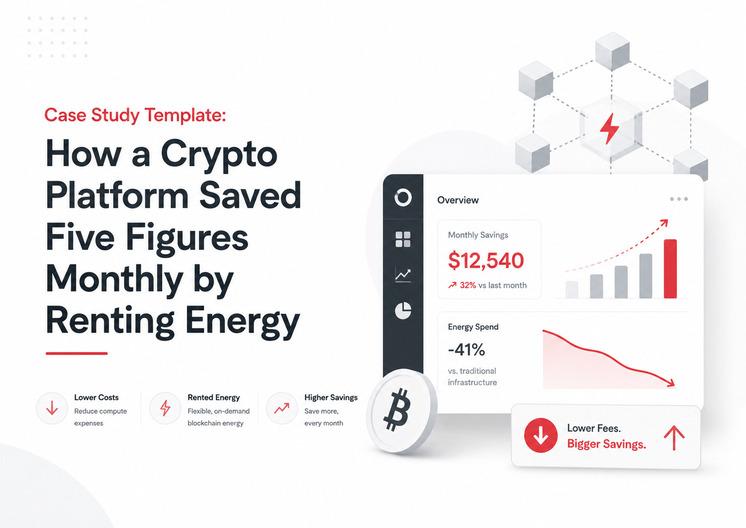
Crypto platforms that process frequent TRC-20 USDT withdrawals often face a simple but expensive problem: every transaction needs network resources, and the cost becomes painful at scale. For teams comparing ways to lower predictable withdrawal expenses, https://tronxenergy.com/ can be used as a reference point when evaluating how rented TRON Energy may support high-volume transfer operations. This case study template shows how a crypto exchange, OTC desk, payment gateway, or wallet service could present a realistic cost-saving story without overcomplicating the technical details.
Executive Summary
This template is designed for a crypto platform that reduced monthly withdrawal costs by renting TRON Energy instead of relying only on burning TRX for every USDT transfer. The core message is straightforward: when transaction volume is stable, renting Energy can turn a recurring network expense into a more controllable operational cost.
A strong case study should explain the starting problem, the platform’s transaction volume, the cost comparison, the implementation process, and the final monthly savings. For a high-volume platform, even a small reduction per transfer can result in five-figure monthly savings.
Background: The Platform and Its Challenge
The example platform in this template is a mid-sized crypto service handling thousands of USDT TRC-20 withdrawals every day. Its users expect fast withdrawals, transparent fees, and reliable processing during peak activity. However, the company’s finance and operations teams noticed that network costs were becoming one of the largest recurring expenses connected to withdrawals.
The platform was not facing a product problem. Users were active, withdrawal demand was strong, and TRON remained one of the preferred networks for stablecoin transfers. The issue was efficiency. Each withdrawal carried a resource cost, and the company needed a way to reduce that cost without slowing down transactions or creating a poor user experience.
The Cost Problem Before Renting Energy
Before using an Energy rental model, the platform paid for withdrawals in a direct and reactive way. Every transfer required resources, and when the platform did not have enough Energy available, it had to cover the transaction cost by burning TRX.
This created three operational problems:
- Withdrawal expenses changed with transaction volume.
- Finance teams had less control over monthly cost forecasting.
- High-volume days created sudden spikes in network spending.
For example, if a platform processes 150,000 TRC-20 withdrawals per month and saves even $0.10 per transaction, the monthly saving reaches $15,000. If the saving is $0.20 per transaction, the impact rises to $30,000 per month. This is why Energy optimization becomes important once a platform moves beyond occasional transfers.
The Solution: Renting TRON Energy
The platform decided to test a TRON Energy rental model for its withdrawal flow. Instead of treating every withdrawal as an isolated cost, it began allocating Energy in advance based on expected transaction volume.
The goal was not only to reduce fees. The team also wanted a smoother process for treasury planning, fewer cost surprises, and a clearer internal model for calculating the real cost of each withdrawal.
A practical implementation usually includes three steps:
- Estimate monthly TRC-20 withdrawal volume.
- Compare the cost of burning TRX with the cost of rented Energy.
- Route eligible transactions through the Energy-backed process.
This approach works best when the platform has predictable activity. Exchanges, OTC desks, crypto payment services, and high-volume wallets are usually better candidates than occasional senders because their savings compound across many transactions.
Sample Case Study Metrics
A case study should include simple numbers that business readers can understand. The exact values will differ by platform, but the structure can look like this:
|
Metric |
Before Energy Rental |
After Energy Rental |
|
Monthly TRC-20 withdrawals |
150,000 |
150,000 |
|
Average cost per withdrawal |
$0.32 |
$0.18 |
|
Monthly network cost |
$48,000 |
$27,000 |
|
Estimated monthly saving |
— |
$21,000 |
These numbers are illustrative, but they show the logic clearly. The platform did not need to change its product or push users to another network. It reduced cost by changing the way it sourced TRON network resources.
Implementation Process
The implementation began with a short audit of withdrawal history. The team reviewed daily withdrawal counts, peak-hour activity, failed transaction rates, and average cost per transfer. This helped define how much Energy the platform needed and when demand was highest.
Next, the platform tested Energy rental on a controlled share of withdrawals. This reduced risk because the company could compare real transaction costs before applying the model to all eligible transfers.
After the test period, the platform expanded the setup to a larger part of its withdrawal infrastructure. The finance team updated its cost model, while the operations team monitored transaction speed, resource availability, and user-facing withdrawal performance.
Results: Five-Figure Monthly Savings
The main result was a measurable reduction in monthly withdrawal expenses. In this template scenario, the platform saved approximately $21,000 per month by renting Energy for high-volume TRC-20 transfers.
The secondary results were also important. The platform gained better visibility into network costs, improved forecasting, and reduced the impact of volume spikes. Instead of reacting to every transaction individually, the team managed Energy as part of its regular infrastructure planning.
For many crypto businesses, this is the real value of Energy rental. The savings matter, but predictability matters too. A platform that understands its withdrawal costs can set better user fees, protect margins, and scale more confidently.
When This Template Works Best
This case study angle is strongest for platforms with regular TRON-based USDT activity. It is especially useful for:
- Crypto exchanges with many daily withdrawals.
- OTC desks settling large numbers of client transfers.
- Payment gateways supporting stablecoin payouts.
- Wallet apps with active TRC-20 users.
- Treasury teams managing repeated operational transfers.
The model is less useful for platforms with rare or unpredictable transactions. If monthly volume is low, the administrative value may be limited. But once a company processes thousands of transfers, the savings can become significant.
Key Takeaways
TRON Energy rental can be positioned as a practical cost-optimization strategy for crypto platforms that rely on USDT TRC-20 transfers. The strongest case study should focus on before-and-after costs, monthly transaction volume, operational control, and the business impact of lower withdrawal expenses.
A well-written case study does not need exaggerated claims. It only needs clear numbers, a realistic process, and a simple explanation of why Energy rental makes sense at scale. For platforms processing high withdrawal volumes, this can be the difference between unpredictable network spending and a controlled, measurable cost-saving system.
Conclusion
This case study template shows how a crypto platform can explain five-figure monthly savings from renting TRON Energy in a credible and business-friendly way. By comparing transaction costs before and after implementation, the article makes the value clear for decision-makers in exchanges, OTC desks, wallets, and payment platforms.
The central lesson is simple: when TRC-20 withdrawal volume grows, network cost optimization becomes a strategic issue. Renting Energy gives crypto businesses a way to reduce expenses, improve forecasting, and protect margins without changing the user experience.