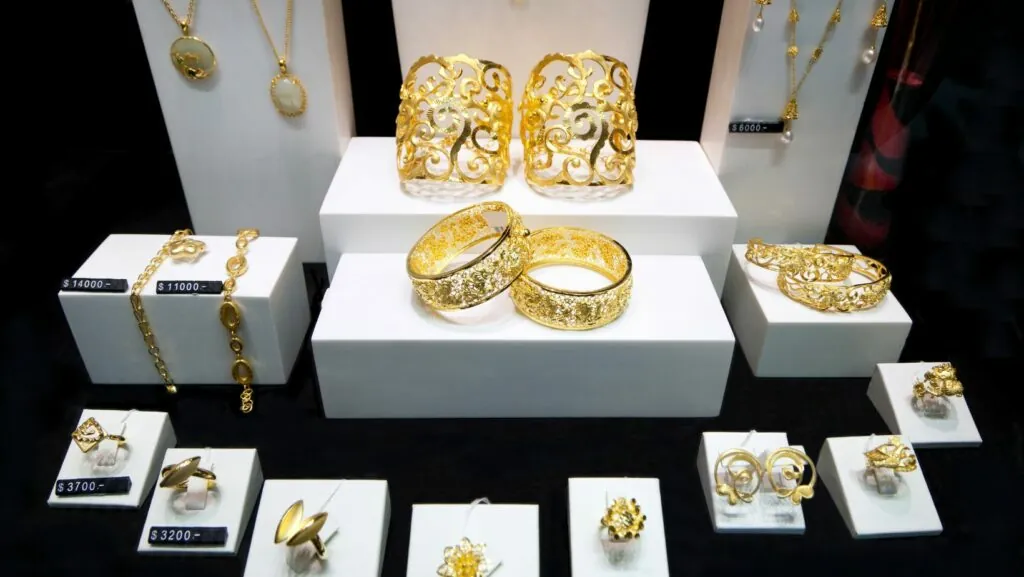
Buying jewelry is usually a deliberate step, as sometimes jewelry turns out to be an attractive investment. So, for buyers who consider it in this context, questions like: “What am I really paying for?” arises. Indeed, it happens that two almost identical jewelry pieces made of the same material from different brands differ greatly in price. We will explain below why this happens and how not to miscalculate with your choice.
How the Jewelry Market Is Organized
Formally, the world jewelry market is divided into two large segments: mass and premium. In the mass segment, fixed or mixed pricing most often dominates, where the price is determined for the product as a whole (including labor costs, marketing, etc.), and not for a gram of precious metal.
As for the premium segment, there is a possibility of encountering individual markups for the brand, design, limited edition, and even the location of the boutique. So how do you understand where the price is fair, and where you will have to pay a large markup?
Fairness of Weight-Based Pricing
Weight-based pricing in the jewelry industry implies a direct proportional dependence of the cost of a piece of jewelry on the weight of the precious metal used and its external exchange value. Additionally, brands can consider the metal sample, labor costs, design (some jewelry houses create iconic designs that many mass brands copy), as well as inserts – stones, enamel, etc.
However, the fact that the main role in calculating the price tag is still played by the weight of the jewelry, gives its buyer a number of advantages. Here are some of them:
Transparent pricing. You always see what you are paying for – for example, if the price per gram of 585 gold is X dollars, and the product weighs Y grams, then this product’s price can be calculated in one step. This is especially attractive for online buyers, who find it impossible to try on or touch the product item.
Minimized markups. Brands and stores that follow fixed pricing often include in the price a marketing markup, rent of luxury premises, as well as packaging, advertising, and other aspects that help them to implement sales. As a result, the product turns out to be too overpriced.
Investment attractiveness. For many people, buying jewelry becomes an investment in metal, and when it is made according to the weight of the product and the price per 1 gram, it can be sold on the secondary market without significant losses. Moreover, depending on the brand, material, and design, many of these pieces of jewelry increase in value over the years, so reselling them can even be profitable.
The ability to compare similar items from several brands. Weight pricing allows buyers to objectively compare two products and quickly answers the question of who has a higher price per gram, and who is more honest in packaging the cost.
Quality control. Finally, honest sellers who focus on the weight-based model also indicate the exact metal sample and provide all the information about the inserts and cut. This ensures that you will not receive, for example, a 2-gram ring at the price of a 5-gram one.
What Is Important to Consider When Choosing Jewelry with Weight-Based Pricing?
You should understand that not all jewelry manufacturers can adopt weight-based pricing. For example, handmade jewelry usually implies high labor costs, and this is normal. But even in this case, weight will become one of the main parameters of the final price tag since the buyer should always know how much metal is in the product. At the same time, chains, rings, and earrings with simple designs and without expensive stones should be priced by weight.
Jewelry companies that consciously adhere to weight-based pricing rely on long-term trust and loyalty from the client. These are most often brands focused on the quality and reasonable value of their products. It is crucial for them that buyers understand what they get in return for their money: accurate weight, verified sample, market price per gram of metal, and honest cost of labor. All this excludes too high marketing markups, making the purchasing process justified.
Final Thoughts
Buyers become smarter and more informed – they want to understand what they are paying for and what the real value of the product is. In turn, brands that choose a weight-based approach are confident in their materials and quality and do not have to hide the true value of their products behind attractive advertising.
That is why weight-based pricing can become the “bridge” between the brand and the buyer, creating a long-term trusting relationship. So, if you are looking for a piece of jewelry that is both pleasing to the eye and worth its money, choose those manufacturers who play fair, for example, Magnolia Jewelers, a family-owned jewelry brand from New York that has been creating unique jewelry from 24-karat gold for over 30 years.
We use cookies on our website to give you the most relevant experience by remembering your preferences and repeat visits. By clicking “Accept All”, you consent to the use of ALL the cookies. However, you may visit "Cookie Settings" to provide a controlled consent.
This website uses cookies to improve your experience while you navigate through the website. Out of these, the cookies that are categorized as necessary are stored on your browser as they are essential for the working of basic functionalities of the website. We also use third-party cookies that help us analyze and understand how you use this website. These cookies will be stored in your browser only with your consent. You also have the option to opt-out of these cookies. But opting out of some of these cookies may affect your browsing experience.
Necessary cookies are absolutely essential for the website to function properly. These cookies ensure basic functionalities and security features of the website, anonymously.
Cookie
Duration
Description
cookielawinfo-checkbox-analytics
11 months
This cookie is set by GDPR Cookie Consent plugin. The cookie is used to store the user consent for the cookies in the category "Analytics".
cookielawinfo-checkbox-functional
11 months
The cookie is set by GDPR cookie consent to record the user consent for the cookies in the category "Functional".
cookielawinfo-checkbox-necessary
11 months
This cookie is set by GDPR Cookie Consent plugin. The cookies is used to store the user consent for the cookies in the category "Necessary".
cookielawinfo-checkbox-others
11 months
This cookie is set by GDPR Cookie Consent plugin. The cookie is used to store the user consent for the cookies in the category "Other.
cookielawinfo-checkbox-performance
11 months
This cookie is set by GDPR Cookie Consent plugin. The cookie is used to store the user consent for the cookies in the category "Performance".
viewed_cookie_policy
11 months
The cookie is set by the GDPR Cookie Consent plugin and is used to store whether or not user has consented to the use of cookies. It does not store any personal data.
Functional cookies help to perform certain functionalities like sharing the content of the website on social media platforms, collect feedbacks, and other third-party features.
Performance cookies are used to understand and analyze the key performance indexes of the website which helps in delivering a better user experience for the visitors.
Analytical cookies are used to understand how visitors interact with the website. These cookies help provide information on metrics the number of visitors, bounce rate, traffic source, etc.
Advertisement cookies are used to provide visitors with relevant ads and marketing campaigns. These cookies track visitors across websites and collect information to provide customized ads.