The introduction of specialized tools like the AI Image Editor has begun to compress these timelines. However, simply adding “AI” to a workflow does not automatically optimize it. True efficiency comes from understanding how these tools integrate into the existing chain of production, particularly when dealing with high-output models like Nano Banana Pro. For teams managing creative operations, the transition to an AI-augmented pipeline requires a shift from “creator” to “curator-operator.”
The Compression of Production Velocity
Production velocity is the primary metric for creative teams under pressure to supply assets for performance marketing, social media, and web content. When using a tool like Banana AI, the “start-up” cost of a creative project drops significantly. Instead of starting from a blank canvas, operators use text-to-image or image-to-image functions to generate high-fidelity baselines in seconds.
In a practical workflow, a creative lead might use Nano Banana Pro to generate several stylistic variations of a product hero shot. The speed of the Banana Pro engine allows for rapid prototyping that would historically require an entire afternoon of mood boarding. By shortening the discovery phase, teams can spend more time on the 10% of the work that adds the most value: the final polish and brand alignment.
However, it is important to acknowledge a current limitation in this velocity. While the generation of an initial image is nearly instantaneous, achieving perfect anatomical accuracy or specific typographic placement still requires human intervention. AI is a powerful accelerator, but it is not a “one-click” replacement for the entire design process. Expecting it to be so often leads to frustration and a breakdown in the production schedule.
Refining the Review Cycle with AI Image Editor
One of the most significant friction points in creative operations is the feedback loop. Stakeholder comments such as “change the background color” or “move the light source” traditionally required a designer to reopen a project file, adjust layers, re-render, and re-export.
The AI Image Editor changes this dynamic by enabling non-destructive, real-time modifications. Using canvas-based workflows, an operator can select a specific area of an image and use generative fill or in-painting to satisfy stakeholder requests during the review meeting itself. This collapses the multi-day “ping-pong” of revisions into a single collaborative session.
This shift in the review cycle demands a higher level of prompt literacy among creative directors. If the director can articulate the necessary change using the internal logic of the tool, the turnaround is immediate. This is where the distinction between different model tiers becomes relevant. Using a high-performance model like Nano Banana allows for a level of responsive editing that slower, more cumbersome models cannot match. The lower latency of these specific models is what makes live editing feasible in a professional setting.
Operational Flexibility and Model Selection
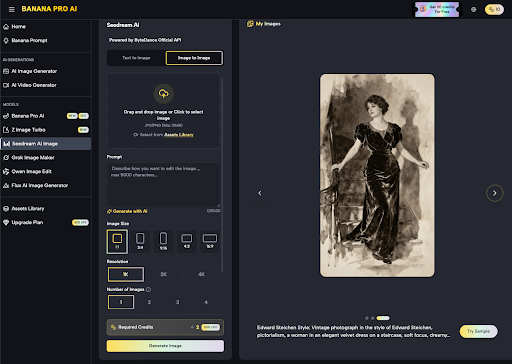
Not every project requires the same level of computational power or detail. Creative operations leads must decide which model fits which stage of the pipeline. For example, Nano Banana Pro is often the choice for final output where detail and composition are paramount. Conversely, earlier stages of the workflow might prioritize speed over absolute fidelity.
The Banana Pro ecosystem provides a variety of “engines” that can be swapped depending on the project’s technical requirements. This is a critical component of professional creative ops: the ability to match the tool to the task. If a team is generating 500 variations of a background for a dynamic ad campaign, they need a model that prioritizes throughput. If they are creating a single high-resolution hero image for a landing page, they need the refined capabilities of the latest Nano Banana Pro iterations.
It is worth noting that there is still a significant amount of uncertainty regarding the absolute consistency of AI-generated characters or products across different scenes. While tools are improving, ensuring that a specific product looks identical across twenty different AI-generated environments remains a challenge that requires careful seed management and consistent prompting strategies.
Integrating Video into the Creative Pipeline
The leap from static imagery to video is perhaps the most significant change in production delivery. Traditionally, video production has been the most expensive and time-consuming part of the creative stack. By leveraging the image-to-video capabilities inherent in many modern AI platforms, teams can now extend the life of their static assets.
A hero image generated and refined in an image editor can serve as the keyframe for a video generation sequence. This ensures visual continuity across platforms—a goal that was previously very difficult to achieve without a massive budget for a multi-day video shoot. When the core visual identity is established through Nano Banana, transitioning that look into a short-form video for social media becomes a matter of technical execution rather than a separate creative “restart.”
The Role of the Canvas Workflow
The transition from a “chat-box” interface to a “canvas” interface marks the maturation of AI creative tools. For professional operators, the canvas is the workspace where different AI outputs can be merged, masked, and manipulated.
A canvas workflow allows for:
Layered Editing: Combining elements from different generations into a single cohesive image.
Expansion: Out-painting edges to fit different aspect ratios (e.g., turning a square Instagram post into a vertical story).
Precision Masking: Using the editor to isolate specific objects for color correction or replacement.
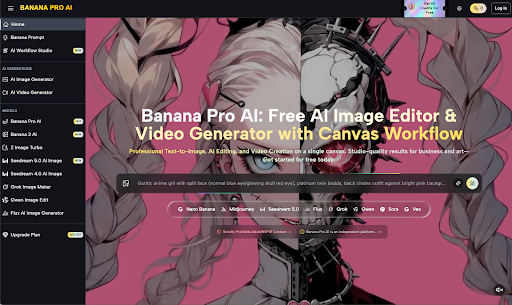
This is where the Banana AI platform excels. It doesn’t just provide a “generator”; it provides a workspace. For a content team, this means they can manage the entire lifecycle of an asset—from the initial prompt in Nano Banana Pro to the final masked edit—within a single environment. This reduces the “software switching” tax that often slows down production teams.
Managing Stakeholder Expectations and Delivery
The final stage of creative operations is delivery. In an AI-augmented world, “delivery” is no longer just the hand-off of a finished file; it is the delivery of a flexible asset. Because the cost of generation is low, teams can deliver a wider variety of options to clients or internal stakeholders.
However, this abundance can lead to “decision paralysis.” Creative ops leads must be careful to curate the AI-generated options before they reach the stakeholder. Just because a tool can generate 50 versions of an image doesn’t mean the stakeholder should see all 50. The role of the human editor remains vital in filtering the “noise” and presenting only the solutions that meet the strategic objectives of the brief.
Furthermore, we must be cautious about the “uncanny valley” and the technical limitations of current models. AI-generated media still occasionally struggles with specific details, such as the number of fingers on a hand or the logic of shadows in a complex architectural scene. Professional delivery requires a human eye to catch these errors before the asset is publicized. The “Native” look of an AI image is improving, but the final quality control layer is still a human responsibility.
Practical Implementation for Teams
To successfully integrate these tools, teams should consider a phased approach:
- Standardize the Prompting Language
To ensure consistency when using Banana Pro or similar tools, teams should develop a shared “prompt library.” This library should include specific keywords that evoke the brand’s visual style, lighting preferences, and color palettes. This reduces the variance between different designers’ outputs.
- Define the Model Tiers
Clarify when to use Nano Banana Pro for high-stakes assets and when to use faster, more efficient models for internal drafts or brainstorming. This manages both the budget and the expectations for turnaround times.
- Audit the Revision Process
Identify the most common feedback types. If 80% of revisions are simple background or color changes, those should be moved entirely into the AI editor’s live-review workflow.
The Evolving Skillset of Creative Operators
The rise of these tools does not render the traditional designer obsolete; it shifts their value proposition. The “muscle memory” of moving pixels is being replaced by the “strategic judgment” of guiding an AI model. An operator who understands the nuances of Banana Pro can accomplish the work of a small department, but only if they possess the fundamental design principles to know why an image works, not just how to generate it.
The current state of creative operations is one of transition. We are moving away from a world where production was a bottleneck and toward a world where the bottleneck is the clarity of the creative vision. Tools like the editor and the various model engines provided by platforms like Banana AI are the infrastructure for this new reality.
As we look forward, the teams that will succeed are those that treat AI not as a magic wand, but as a sophisticated piece of industrial machinery. It requires calibration, oversight, and a deep understanding of its limitations. By grounding our workflows in practical judgment rather than hype, we can realize the true potential of AI in the creative professional space.
Conclusion: A New Baseline for Creativity
The integration of tools like the AI Image Editor into professional workflows represents a permanent shift in how we think about “making things.” The metrics of success are moving toward quality-at-speed. While there are still hurdles—ranging from the nuances of model consistency to the ethical considerations of data usage—the operational benefits are undeniable.
By focusing on the practical application of models like Nano Banana and the efficiency of canvas-based editing, creative teams can reclaim time previously spent on repetitive tasks. This time can then be reinvested into higher-level strategy, more daring creative concepts, and more impactful storytelling. The future of creative operations is not about more images; it is about better ideas, executed at the speed of thought.