Choose a Freelance Audio Service Clients Actually Need
A small business preparing a product launch may already have photographs, a script and several short videos but still lack the sound needed to turn those materials into a finished advertisement. That gap represents a potential service opportunity for independent creators who understand both audio production and the needs of paying clients. With models such as Seedaudio 1.5, freelancers can explore projects that involve expressive voices, original sound environments and video-aware audio generation rather than limiting themselves to basic narration. The challenge is to turn those technical possibilities into a service that someone has a reason to purchase.
Starting a freelance audio business does not necessarily require renting a recording studio or investing in an extensive collection of microphones. But access to a generation tool is not a business model by itself. Clients pay for a useful result, reliable communication and a production process that saves them time. The practical starting point is to choose one service you can deliver consistently, define exactly what the client receives and build a small portfolio that demonstrates the result.
The simplest way to identify a service worth offering is to look for a recurring problem with a clear endpoint. A business owner might need a polished audio track for a thirty-second product video. A podcast producer might need a recognizable introduction and several transition sounds. An independent animation creator might have completed the visual edit but still need character dialogue and an appropriate acoustic environment.
Each of these buyers can describe what a successful delivery means. That is more promising than advertising an open-ended ability to generate any kind of audio. A narrowly defined initial service also makes it easier to estimate the time required, identify suitable portfolio samples and avoid absorbing an unlimited number of revisions.
A freelancer can gradually expand the service after learning which requests actually appear in client conversations. Someone who begins with promotional audio may discover demand for localized versions, recurring campaign assets or sound design for animated product explanations. Those related opportunities are more practical starting points than building a large catalog of services before finding the first customer.
Four AI Audio Services You Can Offer to Clients

Audio finishing for promotional videos
Many small teams can capture usable footage with an ordinary phone but struggle to create a coherent soundtrack. Offer to work from an approved script and an existing video, with a deliverable consisting of narration, appropriately timed background sound and a final mixed audio file. The client should know whether synchronizing the audio with the finished video is included or charged separately.
Video-conditioned generation is particularly relevant to this service. Using the footage and written directions, a creator can develop sound around visible actions and transitions. A product demonstration might need a quiet introduction, clear narration during the main explanation and a distinct ending cue. The freelancer’s value lies in making these elements work together without distracting from the product.
Reusable audio identities for creators
A podcast, educational channel or fictional video series often needs more than one isolated recording. Its producer may want recurring voices, a short opening theme and transition effects that feel consistent across episodes. A starter package could include an original voice direction, a small collection of audio cues and a document explaining how to reuse them.
Reference-based generation offers controls over vocal character and performance. A freelancer can establish a measured, approachable delivery for an educational presenter and later adapt the emotional energy of a specific passage while retaining the intended vocal identity. The source recordings and the rights to reuse them must be established before beginning this work.
Localized versions of existing content
A company with several language markets may need different narration tracks for the same advertisement or product introduction. Instead of promising translation expertise in languages you do not speak, offer audio production in collaboration with a qualified reviewer or with client-approved translated scripts.
The model supports 30 languages, making multilingual production a useful service to investigate. Keep the original and localized scripts organized and verify that product names, measurements and calls to action retain their intended meaning. A client should be able to identify which language version belongs to which video and campaign without opening every file individually.
Original sound packs for independent productions
Independent animation teams and small game projects may require scene atmospheres, interaction sounds or brief fictional conversations. A carefully organized collection that addresses one creative theme can be more attractive than a folder containing hundreds of unrelated noises.
For an original science-fiction interface, a sample pack could include restrained confirmation sounds, several warning cues and a low background texture. Each sound should have a clear name and an identifiable purpose. If you intend to resell packs rather than create them for one client, check the applicable output licenses and marketplace rules before offering them commercially.
Turn AI-Generated Audio Into Professional Client Deliverables
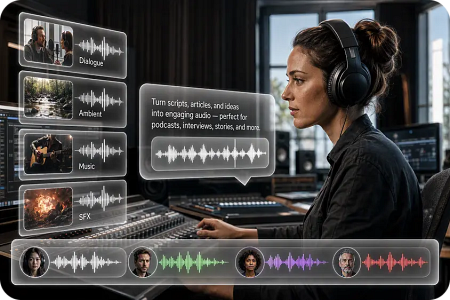
A platform such as Dreamina provides a starting point for combining dialogue, music, ambience and effects through one creative brief. Independent tracks and timing instructions help organize the material for revision. These capabilities can simplify parts of production, but the freelancer still needs to make choices about script accuracy, artistic direction, editing and delivery.
Consider a hypothetical project for an online retailer promoting a new desk organizer. The client sends a twenty-second video, an approved description and instructions that the advertisement should feel calm rather than aggressively promotional. Before generating anything, the freelancer identifies the moments when the product appears, when its features are demonstrated and when the closing message should be heard.
The production brief might specify a gentle opening texture, a clear and relaxed narrator, discreet sounds corresponding to the organizer’s moving parts and a quiet ending. The important instruction is that the voice must remain intelligible throughout. Any specific performance claims should come from the approved script rather than being invented during generation.
The resulting audio is only an intermediate deliverable. Listen for incorrect words, distracting effects, inconsistent volume and poorly placed transitions. A generated opening that sounds impressive in isolation might be too prominent when combined with the narration. Separate audio components make it easier to revise the balance without unnecessarily replacing parts that already work.
Deliver the agreed final mix, and provide individual tracks if the client has purchased an editable package. Include the approved script and meaningful filenames, with version numbers where appropriate. These small organizational decisions can save the buyer more effort than another elaborate sound effect.
Set Prices That Reflect the Work Involved
Before setting a price, establish which activities consume time and money. Generation credits or subscriptions are one expense, but they may not be the largest one. Client calls, script preparation, repeated attempts, pronunciation checks, editing, file exports and revisions can all take significant time.
Calculate a minimum project price by adding direct production expenses to the estimated hours of work multiplied by your target hourly compensation. Include an allowance for project administration and the revisions you have agreed to provide. If you expect to pay transaction fees or subcontract a language review, account for those costs as well. This calculation is a planning method, not a prediction of what customers will pay.
The distinction between generation time and project time matters. A short recording may take little time to generate but require several rounds of review because the client’s script changes. Conversely, a longer production with a clear brief and stable audio references may be relatively straightforward to manage.
Track your actual time for the first few paid assignments. Compare it with the original estimate and identify the activities that repeatedly exceed expectations. If gathering requirements takes longer than editing, a better intake form may be more valuable than a faster generation tool. If clients frequently request individual tracks after delivery, consider offering that as an explicit package option.
Recurring projects can make the economics easier to understand because the client relationship, voice direction and delivery expectations are already established. Nevertheless, do not assume repeat orders will automatically materialize. The decision to pay for subscriptions or other recurring expenses should reflect actual demand and the amount you can afford to spend while testing the service.
Build a Portfolio and Find Your First Freelance Clients
A portfolio should resemble the work you want to sell. Three thoughtful samples are likely to communicate more than a long compilation of unrelated generated recordings. A promotional audio specialist might show a short product demonstration, a dialogue-led advertisement and a stripped-back narration example. A sound designer could present an original scene with several alternative acoustic treatments.
Use fictional brands or material you have permission to work with. Clearly label speculative portfolio projects so that potential clients do not mistake them for completed commercial assignments. Include a short explanation of the creative brief, the intended audience and the deliverables. If possible, demonstrate how a separate voice or effects track can be adjusted to accommodate a revision.
Potential clients can include local agencies, independent video editors, small online retailers and creators who publish regularly. Look for a specific gap in their current material rather than sending a generic message promising AI-powered production. An editor whose product videos already have strong visuals may appreciate a clearly explained audio finishing service more than an offer to overhaul their entire workflow.
A small paid pilot project can help establish whether the working relationship is suitable. Define its duration, number of deliverables and revision allowance in advance. Avoid producing a complete campaign for free in the hope that the buyer will later decide to pay. A focused portfolio and a limited demonstration should be enough to begin a serious discussion.
Protect Your Work, Your Clients, and Your Reputation
A written project agreement should identify who provides the script, who approves factual claims, which files the client receives and how many revisions are included. Distinguish between a correction to your own work and a new request that changes the approved brief. Both parties should understand the treatment of additional languages, alternative versions and editable source materials.
Voice permissions deserve particular attention. A recording sent by a client is not automatically authorized for synthetic reproduction. Obtain appropriate consent from identifiable speakers, document the permitted uses and avoid offering unauthorized celebrity or employee impersonations. Check the generator’s commercial-use terms and any relevant advertising, disclosure and marketplace requirements before distributing finished assets.
Finally, do not promise that audio will guarantee higher sales, audience growth or a particular financial return. The freelancer controls the agreed production work, not the customer’s entire marketing environment. A well-defined service can succeed by consistently delivering usable creative material, communicating clearly and resolving problems without creating unnecessary work for the buyer.
A freelance business built around AI audio is ultimately a creative service business. The technology broadens the range of projects a small operation can attempt, but sustained value comes from understanding what buyers need, pricing the work realistically and turning generated material into thoughtful, dependable deliverables. Start with one service you can demonstrate convincingly, learn from real assignments and expand only when the demand justifies it.